
Seonunsan 335m
A Camellia Mountain Cultivating Zen in the Clouds
Easy Moderate Hard Spring flowers Autumn foliage Snow scenery Sea views Public transport


- Location
- Asan-myeon, Simwon-myeon, and Haeri-myeon, Gochang-gun, Jeollabuk-do
- Courses
- 5 · 2 h 15 min – 7 h 10 min
- Distance
- 5.8 km – 18.9 km
- Managed by
- Gochang-gun Office · 063-564-2121
Trail map
Why it is one of the 100 famous mountains
Selected for its lush forests despite a modest mountain scale, exceptional landscape shaped by distinctive rocks and crags throughout, high ecological value including the camellia forest designated as Natural Monument No. 184, and its designation as a provincial park in 1979. It is also famous for Seonunsa Temple, founded in 577 (the 24th year of King Wideok of Baekje) by Master Geomdan, and the Seonunsa camellia grove comprising around 3,000 500-year-old camellia trees.
About Seonunsan
It is a mountain of 'chamseonwaun,' meaning practicing Zen while lying amidst the clouds. While Zen is inherently elusive like grasping clouds, visiting this mountain naturally gives one a sense of its fitting nature.
The shape of the mountain resembles a pitcher plant. Starting from its high peak Gyeongsusan, the ridge line connects to Dosolsan (334.7m), Gaeippalsan (346.6m), Cheongnyongsan (315m), Bihaksan (308.5m), and Guhwangbong Peak (297.9m). Although it is a low mountain area of only around 300 meters, its flat 7-kilometer-long valley steeps hikers in a Zen atmosphere, calming both steps and mind.
This is not merely because of walking beneath massive old trees that stay dim even in midday, nor is it only because of the red autumn foliage staging an Avatamsaka Sutra scene over the floodgate waters, nor solely the poetic language of camellia flowers contrasting against snowfields or pink red spider lilies spreading like silk carpets across the forest.
The same peacefulness applies when tying hiking boot laces and traversing the ridge. Passing uniquely shaped rocks and legends like Anjangbawi Rock, Byeongpungbawi Rock, Beolbawi Rock, Naktagbawi Rock, Baemaenbawi Rock, and Yongmungul Cave, alongside the expansive Mujang plains and the gleaming ash-gray mudflats of the sea, one feels no urge to rush.
The summit Gyeongsusan stands isolated afar. Standing there on an autumn day, one can watch smoke from burnt chaff across the harvested Heungdeok plains swirl with the sea breeze. Ah! Seonunsan is indeed a mountain where one can enter deep Zen meditation even without lying down.
Renowned for camellia blossoms and cherry blossoms in spring, Seonunsan is called the 'Inner Geumgang of the Honam Region' and was designated a provincial park in 1979. It was originally named Dosolsan, but came to be called Seonunsan after Seonunsa Temple was founded in 577, the 24th year of King Wideok of Baekje.
Living up to its name meaning 'cultivating Zen in the clouds,' the mountain flanks host historic temples and hermitages such as Seonunsa Temple, Chamdangam Hermitage, Dosolam Hermitage, Seoksangam Hermitage, and Dongunam Hermitage. Among them, Seonunsa Temple was founded in 577 by Master Geomdan; it once oversaw 89 hermitages, though only four remain today. Behind Daeungjeon Hall of Seonunsa Temple lies a camellia forest of about 16,500 square meters (Natural Monument No. 184), whose mid-April crimson blossoms inspire wonder. While Kim Jeong-ho's Daedongyeojido marked Seonunsan, modern maps often do not show the name Seonunsan, labeling the peak behind Seonunsa Temple as 'Dosolsan' or 'Suribong Peak.' Multiple legends surround the founding of Seonunsa Temple.
Originally, the temple site was a dragon pond (Yongchu) where a dragon lived. Master Geomdan drove the dragon away, but with no way to fill the deep pond, he floated a puppet boat and had people throw stones at it to play puppet games. Another tale tells of an eye disease breaking out in the village; Master Geomdan spread a rumor that dumping a load of charcoal into the pond and washing one's eyes with the water would cure it, thereby filling the dragon pond to build Seonunsa Temple.
Historically, it is said that Master Geomdan founded Seonunsa Temple with the help of his friend, Master Ueun, who was the royal preceptor to King Jinheung (the 24th king of Silla), funded by King Jinheung's donation. Below Dosolam Hermitage lies Jinheunggul Cave (also known as Jwabyeongul or Yeolseokgul), where King Jinheung is said to have abdicated the throne, entered the mountain with Queen Dosol and Princess Jungae, and practiced asceticism to save sentient beings. With vast views of the West Sea from Nakjodae Observatory and soaring crags like Cheonmabong Peak, the mountain offers endless interest alongside numerous legends woven into its hermitages, rocks, and caves.
In particular, an intriguing legend surrounds the rock-carved Buddha (Maaebul) of Seonunsan. Long ago, it was said that a wondrous prophetic secret was hidden inside the navel of the Buddha, and that the day it emerged, the Yi royal family of Hanyang would fall. Lee Seo-gu, the governor of Jeolla-do, attempted to open the navel but failed due to sudden thunder and lightning; however, before the Donghak Peasant Revolution broke out, Son Hwa-jung, a Donghak leader, is said to have opened the navel and taken the secret.
Courses recommended by the Korea Forest Service
- Ticket Office → Seonunsa Temple → Seoksangam Hermitage → Maijae Pass → Gyeongsusan → East Ridge → Jungchon 2 h 45 min
- Ticket Office → Seonunsa Temple → Dosolam Hermitage → Cheonmabong Peak → Sorijae Pass → Chamdangam Hermitage → Ticket Office 2 h 25 min
- Samin Elementary School → Hyeongjebong Peak → Nojeokbong Peak → Guhwangbong Peak → Col → Huiyeojaegol Valley → Seonunsa Temple → Ticket Office 2 h 50 min
Public transport
The transit hub is Gochang. From Gochang Intercity Bus Terminal, direct buses run 8 times and local county buses run 30 times. From Seoul Gangnam Express Bus Terminal to Gochang, express buses run 16 times daily. From outside Jeollabuk-do, buses operate from Gwangju and Mokpo, with direct buses to Seonunsa Temple available from Gwangju.
Food, lodging & more (Korea Forest Service data, may change)
● Accommodation and Other Information
Because it is a provincial park, numerous accommodations are available at the entrance.
Dongbaek Hotel ☎063-562-1560, Sansaedo Hotel ☎063-562-0204, Seonunjang Motel ☎063-561-2035, Dajeong Minbak (Guesthouse) ☎063-564-1050
● Inquiries
Seonunsan Provincial Park Management Office ☎063-563-3450
Nearby attractions
- Dosolgyegok Valley (Seonunsan Mountain) (도솔계곡 (선운산)) 2.3 km from the summit
-
 Midang Literary House (미당 서정주 시문학관)
3.6 km from the summit
- Duamchodang Hermitage (두암초당) 4.6 km from the summit
-
 Flower Guest Project (꽃객프로젝트)
4.8 km from the summit
-
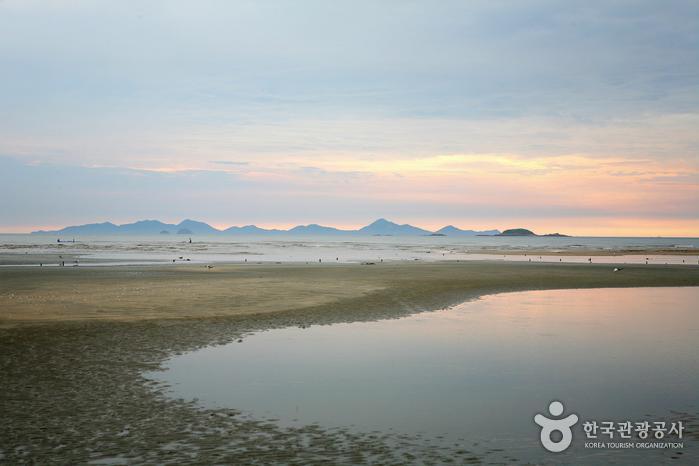 Dongho Beach (동호해수욕장)
8.4 km from the summit
-
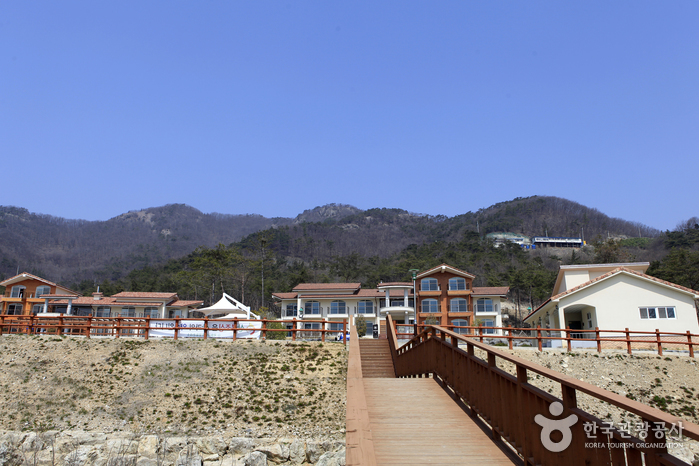 Byeonsan Natural Recreation Forest (변산자연휴양림)
8.5 km from the summit
Times and difficulty are estimates from GPS tracks. Before you go, check the weather, sunset time and any trail closures. Course tracks recorded: 2022-01-06
Text on this page was translated automatically from Korean public data. Place names follow the Revised Romanization; signs on the trail are in Korean.
Data: Korea Forest Service and Korea Hiking & Trekking Support Center (Public Data Portal). Course times and difficulty are estimates from GPS tracks (2022).