
Wolchulsan 811m
A showcase of grand and delicate bizarre rock formations
Moderate Hard Silver grass Sea views Public transport

- Location
- Seongjeon-myeon, Gangjin-gun, and Yeongam-eup, Gunseo-myeon, Haksan-myeon, Yeongam-gun, Jeollanam-do
- Courses
- 5 · 3 h 15 min – 4 h 30 min
- Distance
- 6.3 km – 9.2 km
- Facilities
- Toilets 6 · Parking 7
- Managed by
- Gangjin County Office · 061-430-3114
Trail map
Why it is one of the 100 famous mountains
Selected for its scenic beauty, high ecological value with mixed warm-temperate and temperate forests, and designation as a National Park (1988). Centered around Cheonhwangbong Peak are Geungnakbojeon Hall of Muwisa Temple (National Treasure No. 13) and Haetalmun Gate of Dogapsa Temple (National Treasure No. 50). Near the Yongamsa Temple site beneath Gujeongbong Peak is the renowned Rock-carved Seated Buddha (National Treasure No. 144), located at the highest altitude in Korea.
About Wolchulsan
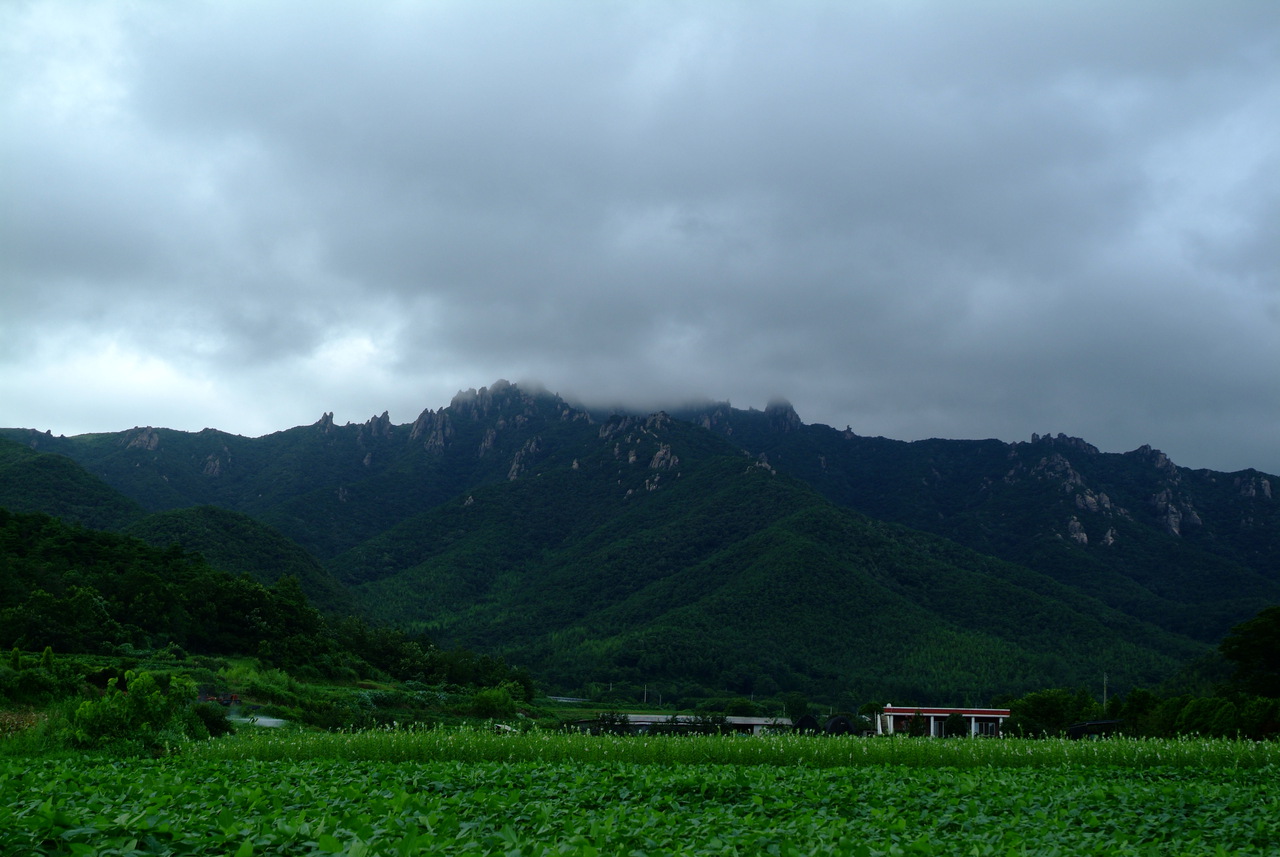
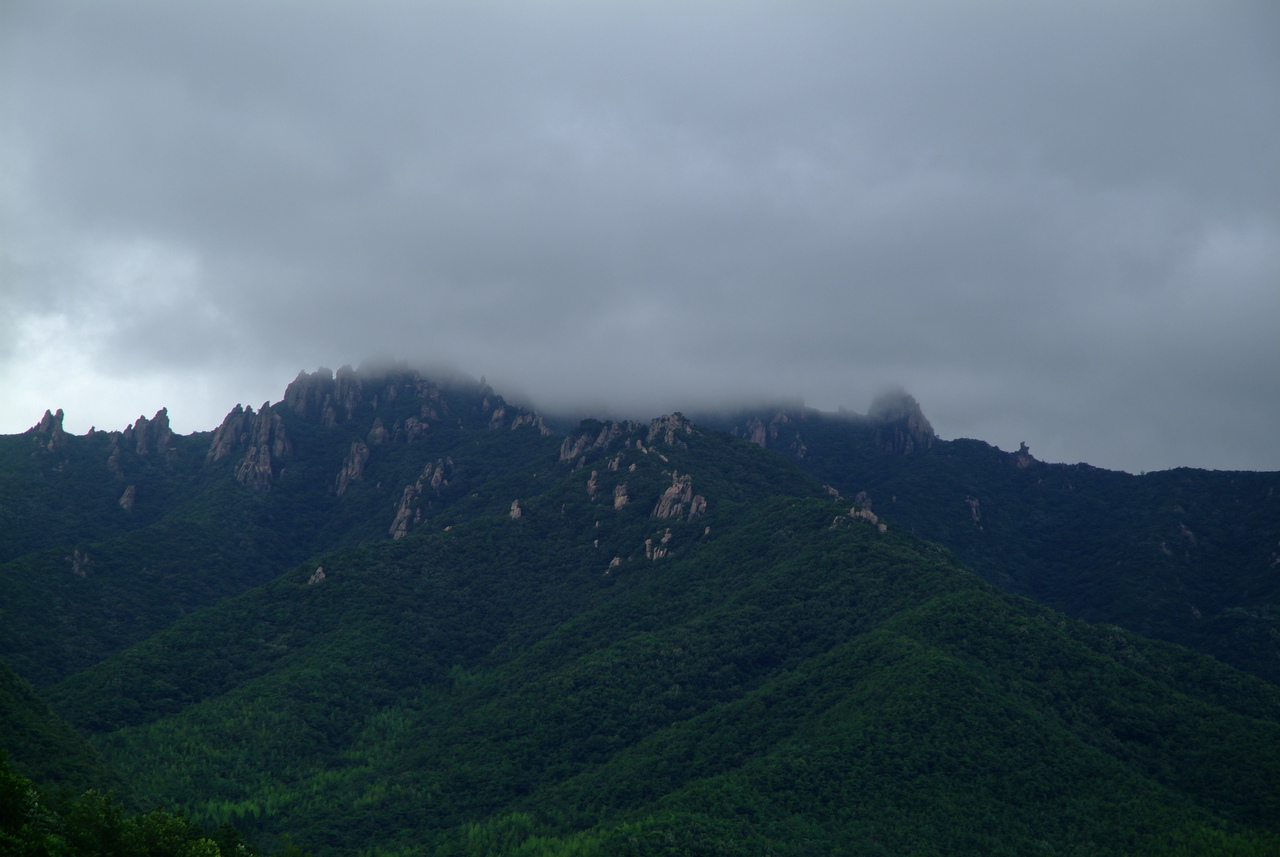
It is a mountain reminiscent of France's World Heritage site, Mont Saint-Michel. Looking at Cheonhwangbong Peak alone, it also resembles a pyramid. The average slope toward Cheonhwangsa Temple is 37 degrees; there is no steeper mountain in this land.
Not only Cheonhwangbong Peak, but also major peaks such as Hyangnobong Peak, Yangjabong Peak, Sirubong Peak, and Munpilbong Peak (Wolgaksan) are made entirely of rock, soaring toward the sky like flames. Few trees are visible, with only dwarf bamboo or scrub scattered like dust to give a faint hint of green. In Feng Shui terms, it is a so-called 'Seokhwasung' (Stone Fire Star), taking on the fiery star shape symbolizing sharpness beyond merely having a rocky summit.
Rocks, outnumbering trees and stars, each resemble something distinct. Bizarre rocks line up east to west, such as Eumgul Cave, Namgeunbawi Rock, and Tongcheonmun Gate, creating a rock exhibition hall. The silver grass field on Miwangjae Ridge is distinctive, and historical cultural sites surrounding its base—Muwisa Temple, Dogapsa Temple, Wolnamsaji Temple Site, Gurim-ri—make it the top destination for exploring the Namdo region.
Mont Saint-Michel, an abbey atop a rocky hill, is also the name of the bay between Normandy and Brittany. People reach the abbey by boat during high tide and on foot during low tide. The fields in front of Gaesin-ri near Cheonhwangsa Temple and Gurim-ri, the birthplace of Dr. Wangin, were originally also such seas. Wolchulsan is a mountain worthy of UNESCO World Heritage status.
Wolchulsan is the smallest national park in Korea, and its myriad of bizarre rock formations is reminiscent of a landscape stone gallery. Harmonizing the steep rocky peaks of the north with masculine grandeur and the gentle southern ridges with feminine delicacy, it is counted among the Five Celebrated Mountains of the Honam region alongside Jirisan, Byeonsan, Cheongwansan, and Naejangsan. It was called Wolnasan during the Silla Dynasty, Wolsaengsan during the Goryeo Dynasty, and has been called Wolchulsan since the Joseon Dynasty.
Courses recommended by the Korea Forest Service
- Dogapsa Temple → Miwangjae → Gujeongbong Peak → Summit → Geumnyong Gyeongpodae → Gyeongpodae Ticket Office 4 h 40 min
- Cheonhwangsa Temple → Cloud Bridge → Summit → Barampokpo Falls → Cheonhwangsa Temple 2 h 20 min
- Bultijae → Nuritjae → Dalgubong Peak → Summit → Gujeongbong Peak → Rock-carved Seated Buddha → Gujeongbong Peak → Miwangjae → Dogapsa Temple 10 h 30 min
Public transport
The starting point is Yeongam. Take the Honam Line KTX (11 times a day) or regular trains (9 times a day) to Gwangju, then take a bus toward Haenam running every 15 minutes and get off at Yeongam. You can also take a train to Mokpo and transfer to a bus.
>Yeongam → Cheonhwangsa Temple: Runs 5 times a day
>Seongjeon Terminal → Gyeongpodae: Runs 6 times a day
>Yeongam → Dogapsa Temple: Runs 2 times a day
>Mokpo → Yeongam: Runs at 1-hour intervals
Food, lodging & more (Korea Forest Service data, may change)
● Accommodations and Other Information
There are many accommodations near Cheonhwangsa Temple and Dogapsa Temple. In the Cheonhwangsa area: Wolchulsan Motel ☎061-473-7943, Sanaginin-ui Jip ☎061-473-3778, Goindol ☎061-471-5599. In the Dogapsa area: Wolchulsanjang Inn ☎061-472-0405, White Motel ☎061-471-4998. In the Gyeongpodae area: Gyeongpodae Sanjang Restaurant ☎061-432-5767. Campsites in the Cheonhwangsa area and Gyeongpodae are also available. Inquiries and reservations: Wolchulsan Management Office ☎061-473-5210, Gyeongpodae Management Team ☎061-432-7921.
● Inquiries
Wolchulsan National Park Office ☎061-473-5210, 5112
Nearby attractions
-
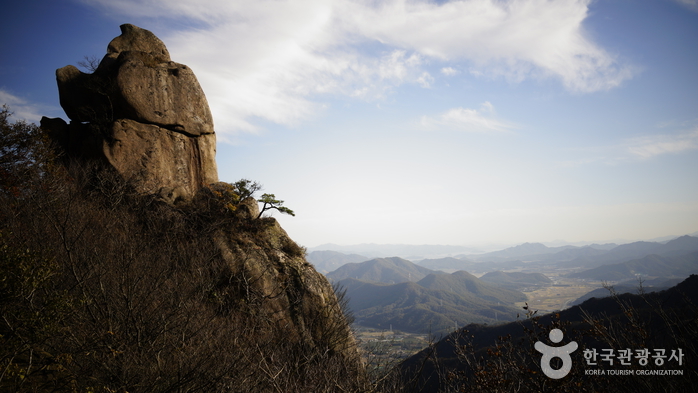 Wolchulsan National Park (월출산국립공원)
1.9 km from the summit
-
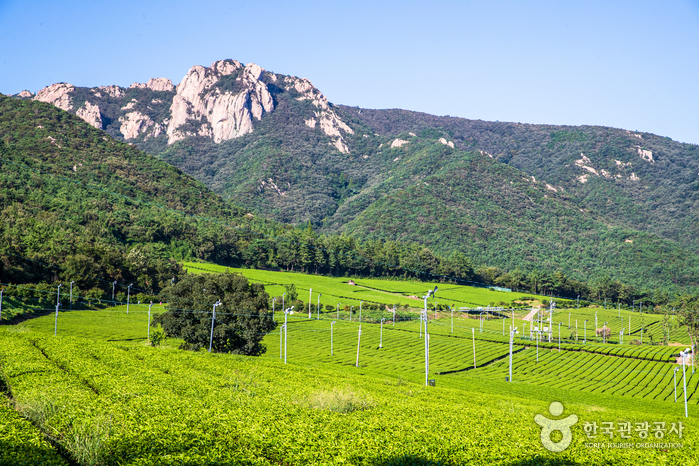 Gangjin Dawon Tea Plantation (전남 강진다원)
2.9 km from the summit
-
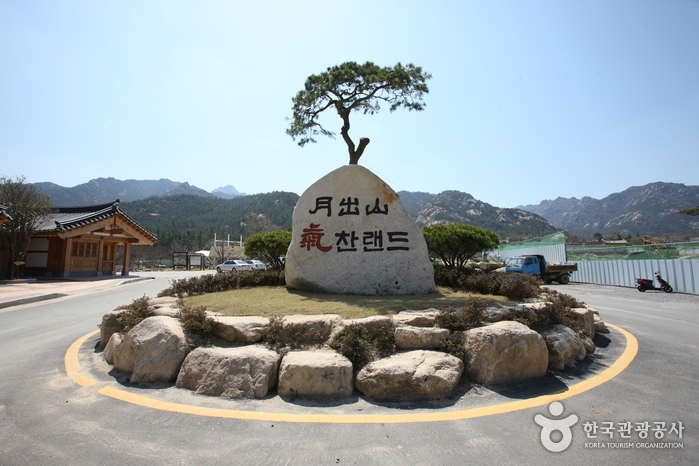 Wolchulsan Gichan Land (월출산 기찬랜드)
3.2 km from the summit
-
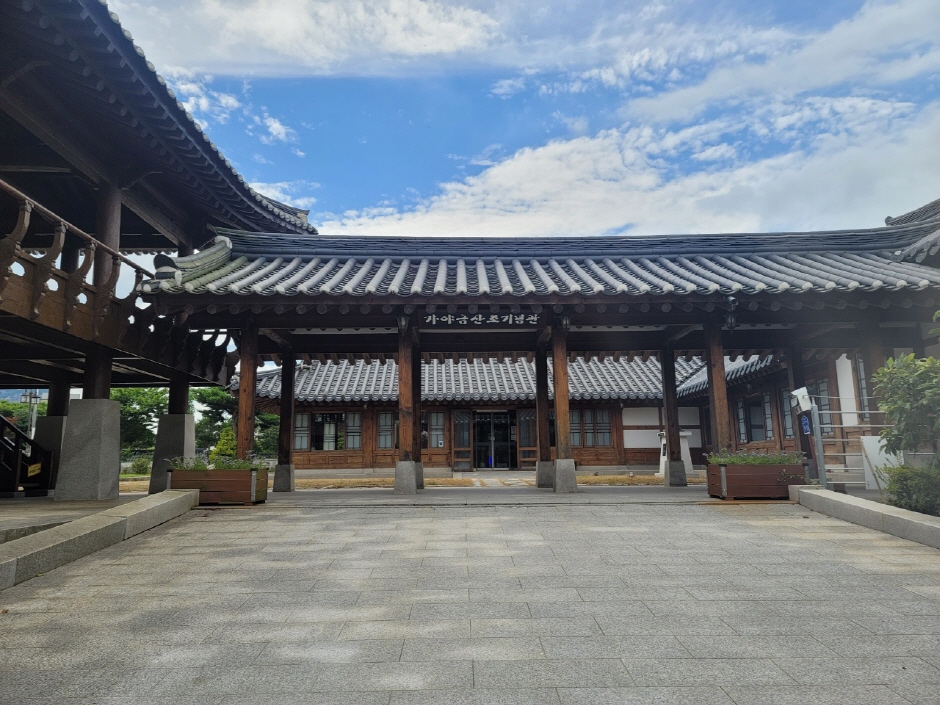 Gayageum Theme Park (가야금테마공원)
3.2 km from the summit
-
 Muwisa Temple (무위사)
3.5 km from the summit
-
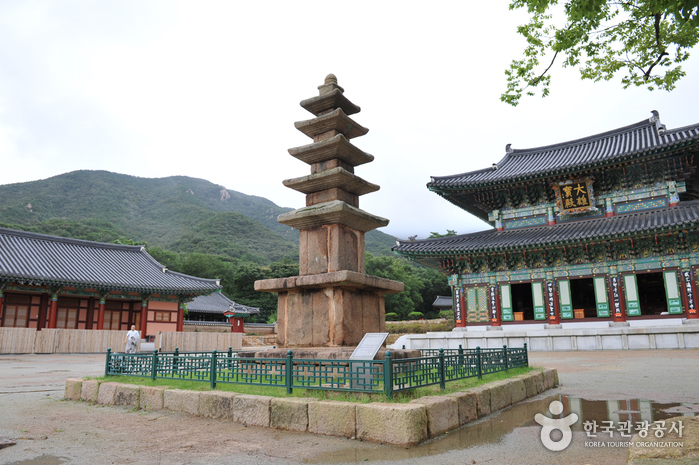 Dogapsa Temple (도갑사)
4.1 km from the summit
Times and difficulty are estimates from GPS tracks. Before you go, check the weather, sunset time and any trail closures. Course tracks recorded: 2022-01-06
Text on this page was translated automatically from Korean public data. Place names follow the Revised Romanization; signs on the trail are in Korean.
Data: Korea Forest Service and Korea Hiking & Trekking Support Center (Public Data Portal). Course times and difficulty are estimates from GPS tracks (2022).