
Naejangsan 764m
The Fiery Geumgang of Honam
Moderate Hard Valleys Autumn foliage Public transport


- Location
- Naejang-dong, Jeongeup-si and Ssangchi-myeon / Bokheung-myeon, Sunchang-gun, Jeollabuk-do
- Courses
- 4 · 3 h 40 min – 6 h 50 min
- Distance
- 7.3 km – 16.2 km
- Facilities
- Toilets 13 · Parking 3
- Managed by
- Jeongeup City Hall · 063-539-7114
Trail map
Why it is one of the 100 famous mountains
Selected as one of the Five Great Mountains of Honam, designated as a National Park in 1971, characterized by bizarre rock formations, dense forests, and clear streams. Centering around Naejangsa Temple, the ridgeline forms a horseshoe shape from Seoraebong Peak through Bulchulbong, Yeonjibong, Kkachibong, Sinseonbong, and Janggunbong, creating a fortress-like natural basin. The torreya forest (Natural Monument No. 153) around Wonjeogam, a subsidiary hermitage of Naejangsa Temple, is particularly famous.
About Naejangsan
In Korea, Naejangsan is the first mountain that comes to mind when thinking of autumn foliage. The road stretching just over 3 km from the entrance to Naejangsa Temple is entirely lined with maple trees. During peak foliage season, the mountain's interior draws immense crowds.
Most leaf-peeping visitors only explore the valley foliage and leave. But the true experience is traversing the horseshoe-shaped ridge crest and gazing down at the red carpet inside. The peaks along this ridge are Wolyeongbong, Seoraebong, Manghaebong, Yeonjibong, Kkachibong, the summit Sinseonbong, Yeonjabong (Munpilbong), and Janggunbong.
Seoraebong Peak, named for its resemblance to a traditional harrow (seorae), features saw-toothed rocky pinnacles that form the most renowned view in Naejangsan. The best vantage point is from the middle gate of Byeongnyeonam Hermitage, a vista cherished deeply by novelist Moon Soon-tae.
Halfway up Seoraebong Peak stands a 700-year-old maple tree, reaching 20 meters in height with a circumference of 4 meters. While the maple trees in the valley were planted by Jeongeup County after national liberation, Naejangsan's autumn foliage history is far from brief.
During the Baekje period, following the founding of Yeongeunsa Temple, it was called Yeongeunsan. Over time, the name evolved into Naejangsan. However, historic sites are scarce, without a single designated National Treasure. A must-see spot is Yonggul Cave. Though it is a simple natural cavern holding only small stone pagodas built by people, this cave safeguarded the Joseon Wangjo Sillok (Annals of the Joseon Dynasty) moved from the Jeonju Archive during the 1597 Japanese invasion; without it, that UNESCO World Heritage record would not exist today.
Naejangsan means 'a mountain concealing infinite wonders within that cannot be seen from the outside.' With its craggy cliffs, valleys, waterfalls, and brilliant foliage, it possesses every virtue expected of a mountain, making it an extraordinary autumn destination.
Straddling Jeongeup-si and Sunchang-gun in Jeonbuk, Naejangsan is recognized as Korea's premier autumn foliage site. According to the Jeonghyeru Gi record in Naejangsa Temple, it is counted among the Five Great Mountains of Honam, alongside Jirisan in Gurye, Wolchulsan in Yeongam, Cheongwansan in Jangheung, and Neunggasan (Byeonsan) in Buan.
Its horseshoe-shaped ridge adorned with whimsical rocky cliffs and dense maple forests makes it a widely celebrated autumn hiking destination.
Courses recommended by the Korea Forest Service
- Naejangsa Temple → Byeongnyeonam Hermitage → Seoraebong Peak → Bulchulbong Peak → Wonjeogam Hermitage → Naejangsa Temple 3 h 40 min
- Naejangsa Temple → Wonjeogam Hermitage → Manghaebong Peak → Yeonjibong Peak → Kkachibong Peak → Sinseonbong Peak (Summit) → Naejangsa Temple 4 h 40 min
- Iljumun Gate → Byeongnyeonam Hermitage → Seoraebong Peak → Bulchulbong Peak → Manghaebong Peak → Yeonjibong Peak → Kkachibong Peak → Sinseonbong Peak (Summit) → Yeonjabong Peak → Janggunbong Peak → Yugunchi Pass → Naejangsa Temple access road 7 h 30 min
Public transport
The transportation hub is Jeongeup. Jeongeup is served by Honam Line KTX 19 times daily and regular trains 20 times daily. Express buses run from Dong Seoul Terminal 60 times a day, and from Gangnam Express Bus Terminal every 40 minutes, including one late-night bus. Direct buses to Jeongeup are available from Busan, Incheon, Bucheon, Seongnam, Ansan, Anyang, Gwangju, Mokpo, and cities across Jeollabuk-do. Buses bound for Naejangsa Temple can be boarded at Jeongeup Intercity Bus Terminal or Jeongeup Station.
> Jeongeup → Naejangsa Temple: Runs at 20-minute intervals
Food, lodging & more (Korea Forest Service data, may change)
● Lodging and Info
Numerous tourist hotels and inns are located in the Naejangsan District Facility Area.
Bongrim Sanjang ☎063-538-9763, Sarangbang Motel ☎063-538-8183, Greentopia ☎063-538-9763. The campsite below Bitjae Pass is also available.
● Inquiries
Naejangsan National Park Office ☎063-538-7875
Nearby attractions
-
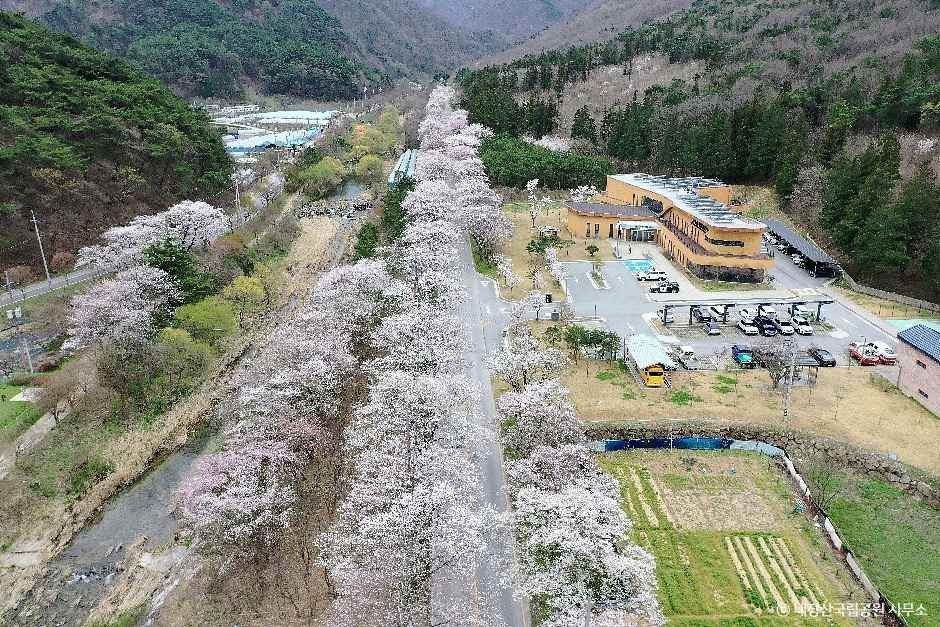 Naejangsan National Park (내장산국립공원)
2.1 km from the summit
-
 Uhwajeong Pavilion (우화정(내장산))
2.1 km from the summit
- Naejangsan Sculpture Park (내장산조각공원) 3.7 km from the summit
-
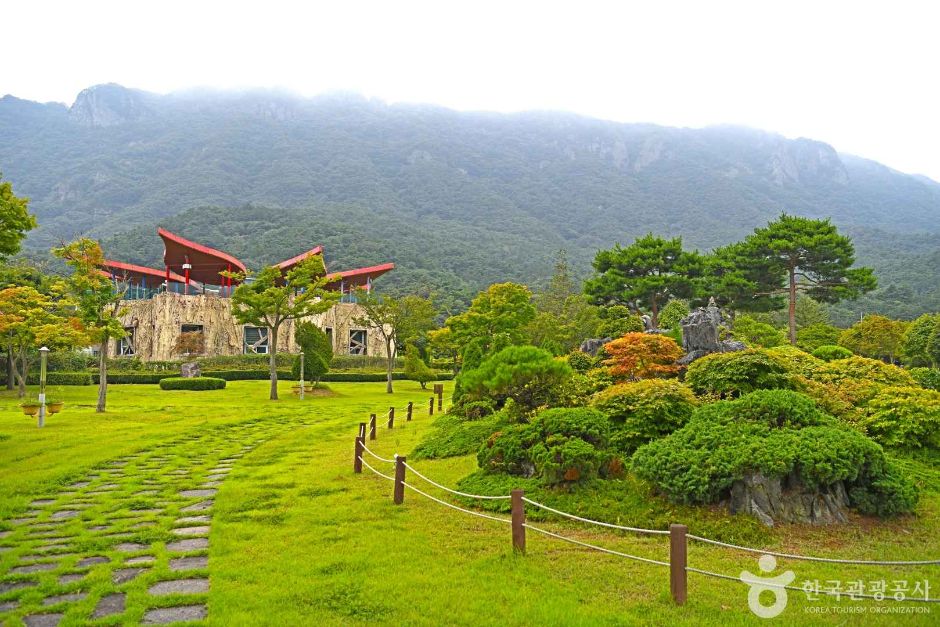 Naejangsan Maple Ecology Park (내장산 단풍생태공원)
3.8 km from the summit
- Baegyangsa Temple (백양사) 4.2 km from the summit
- Mirsaem Bridge (미르샘 다리) 4.5 km from the summit
Times and difficulty are estimates from GPS tracks. Before you go, check the weather, sunset time and any trail closures. Course tracks recorded: 2022-01-06
Text on this page was translated automatically from Korean public data. Place names follow the Revised Romanization; signs on the trail are in Korean.
Data: Korea Forest Service and Korea Hiking & Trekking Support Center (Public Data Portal). Course times and difficulty are estimates from GPS tracks (2022).