
Jirisan 1,915m
The end of the Baekdu ridge, a utopia steeped in historical blood and tears
Moderate Hard Spring flowers Valleys Autumn foliage Sunrise Public transport


- Location
- Sancheong-gun, Hadong-gun, and Hamyang-gun, Gyeongsangnam-do; Namwon-si, Jeollabuk-do; Gurye-gun, Jeollanam-do
- Courses
- 5 · 3 h 5 min – 8 h 35 min
- Distance
- 7.2 km – 21.3 km
- Facilities
- Toilets 8 · Parking 3
- Managed by
- Sancheong-gun Office · 055-970-6000
Trail map
Why it is one of the 100 famous mountains
Designated as the southern mountain of Silla's Five Sacred Mountains, Jirisan is centered around Cheonwangbong Peak (1,915.4m), the highest peak in mainland South Korea, along with Nogodan (1,507m) and Banyabong Peak (1,731.8m). They form a massive mountain cluster extending about 100 li from east to west, shaping scenic landscapes such as the '12 Dongcheon of Jirisan.' It was selected as Korea's First National Park (1967) as the nation's greatest natural ecological treasury. Its name originates from the belief that even a foolish person becomes wise upon staying here. Famous temples include Hwaeomsa, Cheoneunsa, Yeongoksa, and Ssanggyesa.
About Jirisan
Jirisan is grand. It is high, vast, and deep. It is a massive mountainous realm casting its shadow over three provinces and six districts: Hamyang, Sancheong, Hadong, Gurye, Namwon, and Unbong. The main ridge alone, rising above 1,000 meters, spans about 110 li (approx. 44 km). It stretches from Deokdusan Mountain (1,151.5m) west of Silsangsa Temple to Ssukbatjae (1,315.4m) north of Cheonwangbong Peak (measured as 34.2 km in actual tape distance from Nogodan to Cheonwangbong Peak). It forms the ridge beam of the southern region of Korea.
From this ridge beam, more than a dozen subsidiary ridges flow down. Between these descending ridges lie just as many valleys. Together, they form an immense mountain mass covering 140 million pyeong. Within it lie the 10 scenic wonders of Jirisan: the sea of clouds at Nogodan, autumn foliage at Piagol, sunset at Banyabong Peak, the bright moon at Byeoksoryeong, royal azaleas at Seseok Plain, Bulil Falls, the divine scenery of Yeonhacheon, sunrise at Cheonwangbong Peak, Chilseon Valley, and the clear waters of the Seomjingang River.
The highest vantage point is Wangsirubong Peak (1,240.2m). From there, the Seomjingang River glitters like thin ice on a sandbar, and Cheonwangbong Peak looks down from the high sky commanding Jeseokbong Peak and Chotdaebong Peak. It is also a treasure house of Buddhist culture, home to Ssanggyesa, Yeongoksa, Hwaeomsa, Cheoneunsa, Silsangsa, and Byeoksongsa temples, as well as the Dansoksaji Temple Site with its two lonely stone pagodas. In total, it holds seven National Treasures and twenty-five Treasures.
Along with Geumgangsan and Hallasan, it is counted among the Three Sacred Mountains of Korea. It has also been called Bangjangsan, Duryusan, and Bulboksan. Its name carries the meaning of a mountain where a wise, enlightened person will appear.
Famed mountains are often enveloped in many names. Since ancient times, Jirisan has been known as the place where the major Baekdudaegan ridge concludes. The geography book Taengniji referred to it as Duryusan, and during the era of Qin Shi Huang, it was called Bangjangsan as one of the Three Sacred Mountains. The name 'Jiisan' also embodies various legends, meaning 'a mountain of different wisdom' or 'a mountain with the wisdom to foresee natural disasters.'
As the Buddhist master Seosan Daesa described, 'Geumgangsan is exquisite but lacks grandeur, while Jirisan is grand but lacks exquisiteness.' Rather than sharp crags, Jirisan boasts magnificent and gentle, voluminous forms. Its highest point is Cheonwangbong Peak (1,915.4m), officially located at San 208, Jungsan-ri, Sicheon-myeon, Sancheong-gun, Gyeongnam, alongside Banyabong Peak (1,731.8m) and Nogodan (1,507m). Along the 100-li ridge connecting Cheonwangbong Peak and Nogodan, there are 10 peaks surpassing 1,500 meters and about 20 peaks exceeding 1,000 meters. Expansive high plateaus are also well developed, showcasing spectacles of wildflowers and royal azaleas. As the terrain is not overly rugged despite having around 80 peaks, deep valleys have developed between them.
The valleys feature abundant water and gentle slopes. There are more than 20 famous valleys alone, including Jungsan-ri, Daewonsa, Georim, Jangdang, Baemsagol, Hwaeomsa, Simwon, Piagol, Hansin (Baengmudong), and Chilseon valleys.
Courses recommended by the Korea Forest Service
- Jungsan-ri → Kalbawi Rock → Mangbawi Rock → Beopgyesa Temple (Rotary Shelter) → Cheonwangsaem Spring → Cheonwangbong Peak → Jungsan-ri 8 h
- Seongsamjae → Nogodan → Imgeollyeong → Norumok → Banyabong Peak → Hwagaejae → Baemsagol → Banseon 7 h 30 min
- Georim → Seseok Shelter → Yeonhabong Peak → Jeseokbong Peak → Cheonwangbong Peak → Jungsan-ri 9 h
Public transport
Base points are Gurye, Jinju, and Hamyang. From Gurye, buses to Hwaeomsa Temple run frequently, to Ssanggyesa Temple 13 times daily, and to Seongsamjae 8 times daily. From Jinju, buses to Jungsan-ri run 16 times daily; from Hamyang, buses to Baengmudong run 18 times daily. For Gurye, taking the Jeolla Line train (13 times daily departing from Yongsan) is recommended, while buses are convenient for Jinju or Hamyang. To Jinju, premium express buses depart every 30 minutes from Seoul Nambu Terminal (including 3 late-night runs), every 20 minutes from Busan Nopo-dong Terminal, every 45 minutes from Daegu Seobu Terminal, and hourly from Daejeon Dongbu Terminal.
Buses to Jinju also run from Incheon, Cheongju, Ulsan, Jeonju, Gwangju, and Yeosu. For Hamyang, buses run 12 times daily from Dong Seoul Terminal (including 2 late-night runs) and 8 times daily from Seoul Nambu Terminal. Buses also run every 15 minutes from Busan, every 30 minutes from Daegu, and regularly from Incheon, Suwon, Gwangju, and Jeonju.
Food, lodging & more (Korea Forest Service data, may change)
● Dining, Lodging, and Other Info
The Jirisan region is known for local delicacies. Near the entrance to Hwaeomsa Temple, Namak Garden (061-782-2715) is well known for duck dishes. In Hwagae near the entrance of Ssanggyesa Temple, try river crabs, marsh clam soup (jaecheopguk), and fried sweetfish from the Seomjingang River. Recommended spots include Taebong Sikdang (055-883-2466) and Dongheung Sikdang (055-883-8333). In Baemsagol, Cheongsong Garden (063-636-3563) is famous for mountain vegetable bibimbap and boiled whole chicken (baeksuk).
Most accommodations around the mountain base are minbak (guesthouses), except in the Gurye area. Around Hwaeomsa Temple: Jirisan Plaza Hotel (061-782-2171), Hwaeomgak Yeogwan (061-782-0997). Near Ssanggyesa Temple: Ssanggye Byeoljang (055-883-1665), Seomjingang Sikdang (055-883-2345). Near Jungsan-ri: Cheonwangbong-ui Jip (055-972-1155), Duryu Sanjang (055-972-1289). Near Baengmudong: Baengmu Sanjang Rest Area (055-962-5211), Chamsaemjip (055-962-5332).
● Inquiries
Jirisan National Park Eastern Office: 055-942-7771~2
Southern Office: 061-783-9100~1
Northern Office: 063-625-8911~2
Nearby attractions
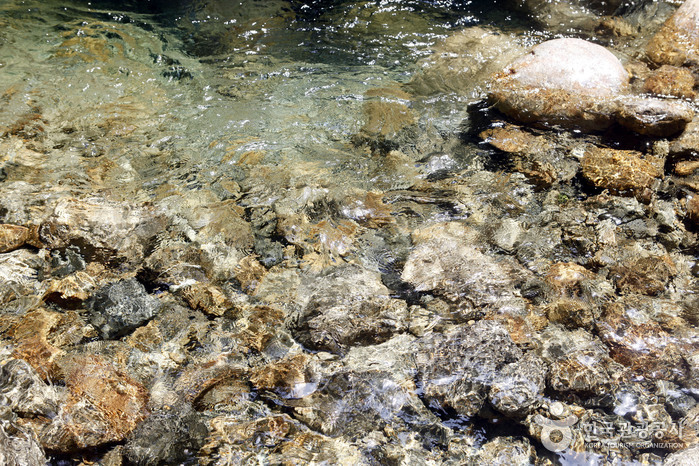 Jirisan Chilseongyegok Valley (칠선계곡(지리산))
 Jirisan Cheonwangbong Peak (지리산 천왕봉)
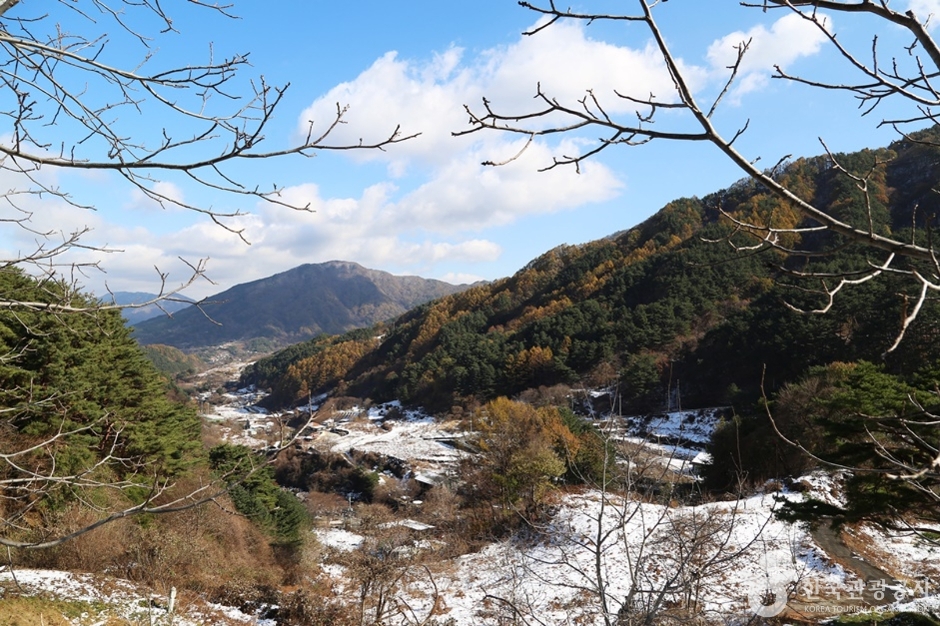 Jirisan Recreational Forest (국립 지리산자연휴양림)
Times and difficulty are estimates from GPS tracks. Before you go, check the weather, sunset time and any trail closures. Course tracks recorded: 2022-01-06
Text on this page was translated automatically from Korean public data. Place names follow the Revised Romanization; signs on the trail are in Korean.
Data: Korea Forest Service and Korea Hiking & Trekking Support Center (Public Data Portal). Course times and difficulty are estimates from GPS tracks (2022).