
Jeombongsan 1,426m
A mountain where primeval forests and valleys blend harmoniously
Easy Valleys Autumn foliage Public transport
- Location
- Inje-eup and Girin-myeon, Inje-gun; Seo-myeon, Yangyang-gun, Gangwon-do
- Courses
- 1 · 2 h – 2 h
- Distance
- 5.3 km – 5.3 km
- Managed by
- Inje County Office · 033-461-2122
Trail map
Why it is one of the 100 famous mountains
Selected in consideration of its dense primeval forests and high ecological value, including native colonies of Megaleranthis saniculifolia, leading to its designation as a UNESCO Biosphere Reserve and management as a Forest Genetic Resource Reserve. It was also selected as a forest to be preserved at the 1st National Beautiful Forest Contest. It features the Osaek Mineral Spring, known for its 12 pools and 9 bends, and the Three-story Stone Pagoda in Osaek-ri, Yangyang (Treasure No. 497), located at the site of Seongguksa Temple in Jujeongol Valley.
About Jeombongsan
Seoraksan Observatory Embracing Osaek Mineral Spring>
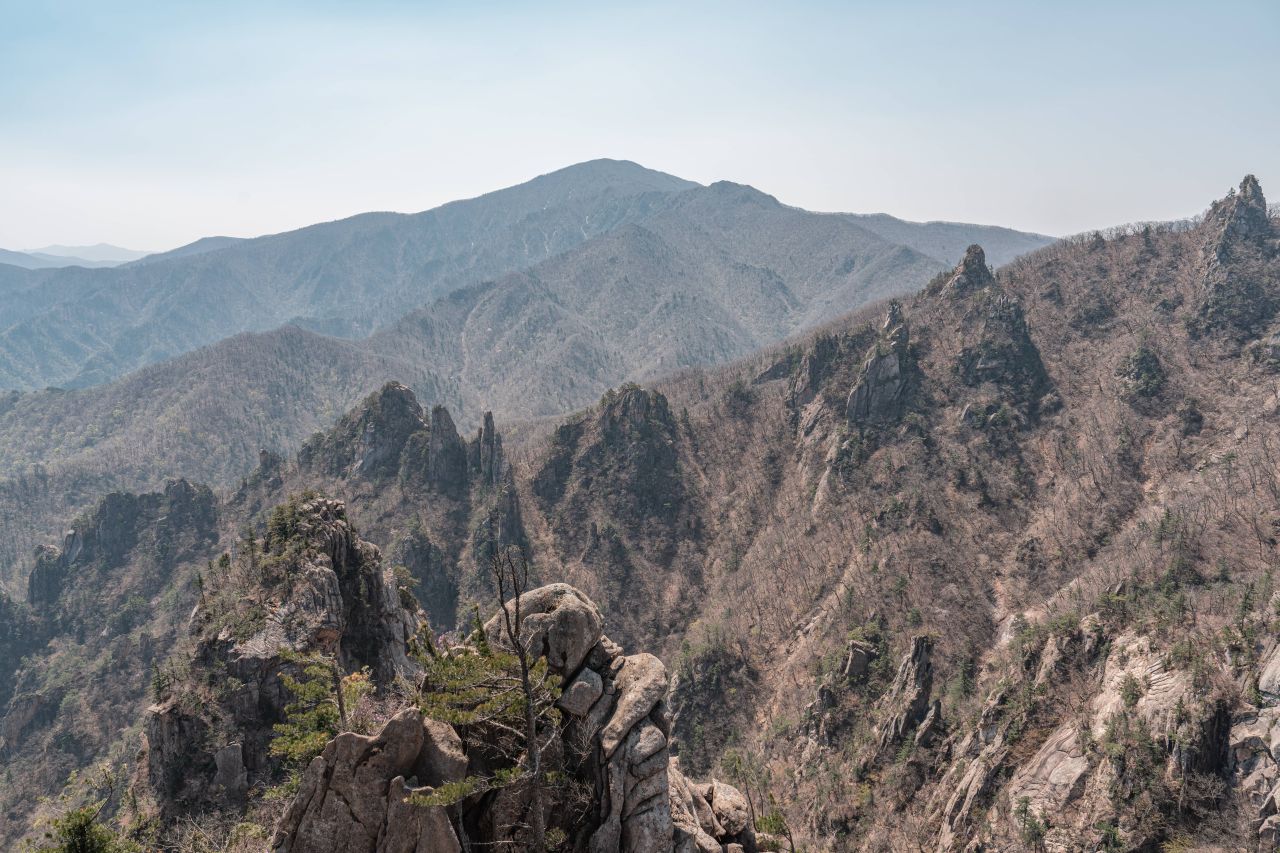
Although Jeombongsan is home to Osaek Hot Springs and mineral springs, it had long been overshadowed by Seoraksan. In autumn, however, it comes into the spotlight as an autumn foliage hiking destination, with Jujeongol Valley resembling a miniature Gayadong Valley and fantastic rocks reminiscent of Seoraksan's Cheonbouldong Valley.
The old name of Jeombongsan is said to be Deombungsan; for this reason, Jageunjeombongsan, which you encounter while climbing from Gombaeryeong Pass to Jeombongsan, is also called Jageundeombung. Osaek Mineral Spring at the foot of Jeombongsan is carbonated water rich in iron, known to be effective for gastrointestinal disorders, neuralgia, and anemia. Hikes on Jeombongsan can start from Osaek, Hangyeryeong, Gwidun, Jindong-ri, and other points, but currently only the Osaek Mineral Spring section is open. The area around Jeombongsan has been designated as a special protection zone for wild plant communities, restricting access until 2026.
Visible to the right of Hangyeryeong Pass, Jeombongsan faces Daecheongbong Peak of Seoraksan across north and south, forming part of Seoraksan National Park.
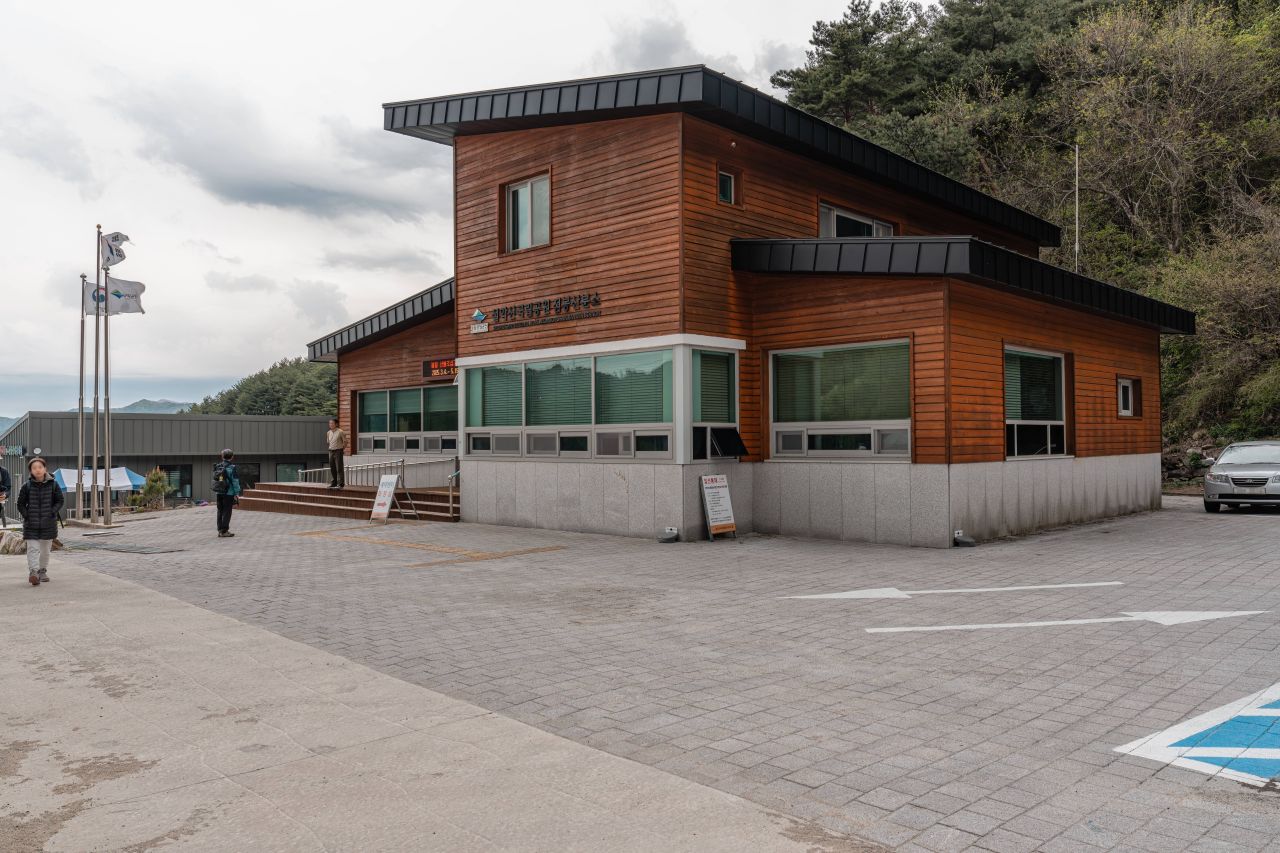
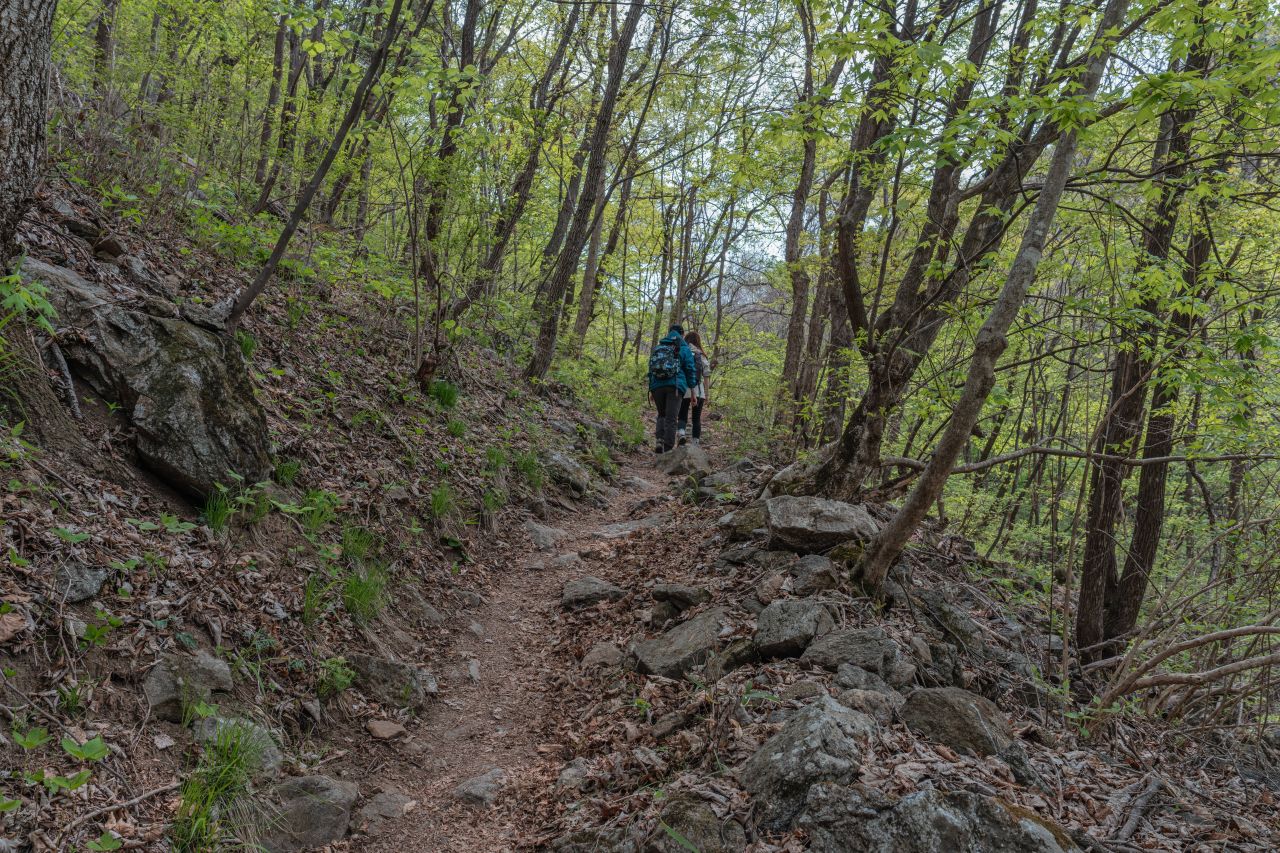
A major attraction is Jujeongol Valley, renowned for its 12 pools and 9 bends, where uniquely shaped rocky peaks on both sides, primeval forests, and clear valley waters blend into magnificent scenery; Osaek Mineral Spring at the entrance to Jujeongol is a must-visit spot. It is regrettable that access is restricted due to military zones. The path climbing up toward Anguksa Temple slightly below the branch office crosses rocky slopes and is indistinct, so hikers generally choose the Seochang-ri branch office as the starting point.
Courses recommended by the Korea Forest Service
- Osaek Ticket Office → Yongso Falls Fork → Sibipokpo Falls → Deungseondae Peak → Heullimgol Ticket Office 3 h 25 min
Public transport
The starting point is Yangyang. > Yangyang → Osaek: Local/intercity bus (via Hangyeryeong) runs 15 times a day.
Food, lodging & more (Korea Forest Service data, may change)
● Food, Lodging, and Other Info
Accommodations in the Osaek District are available: Green Yard Hotel ☎033-672-8500, Osaek Oncheonjang (☎033-672-3636), Seorak Oncheonjang (☎033-672-3849). Restaurants in the Osaek District mainly serve wild vegetable set meals.
● Inquiries
Seoraksan National Park Office Osaek Branch ☎033-672-2883
Nearby attractions
-
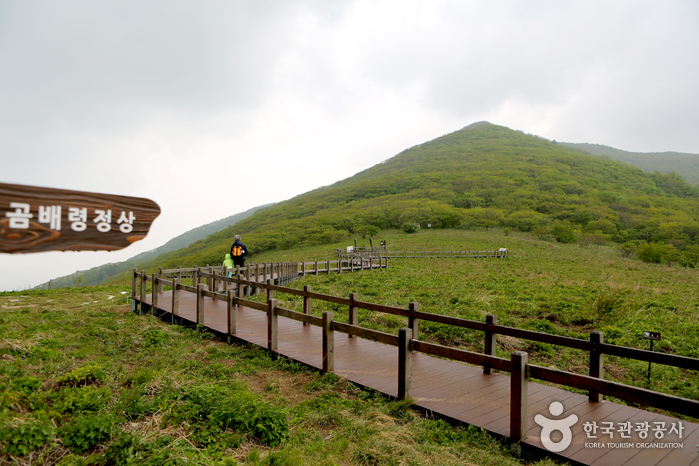 Jeombongsan Mountain Gombaeryeong Pass (점봉산 곰배령)
5.1 km from the summit
-
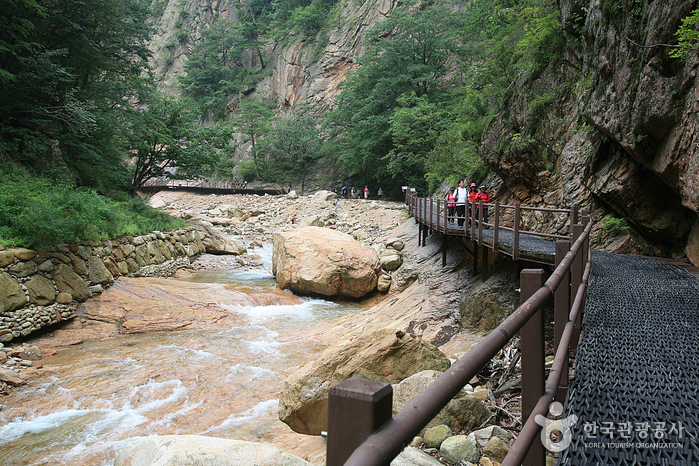 Seoraksan Osaek Jujeongol Valley (설악산 오색주전골)
5.4 km from the summit
- Osaek Mineral Spring (오색약수터) 5.6 km from the summit
- Osaek Green Yard Hotel (오색탄산온천) 6.1 km from the summit
- Seoraksan Daecheongbong Peak (설악산 대청봉) 6.7 km from the summit
-
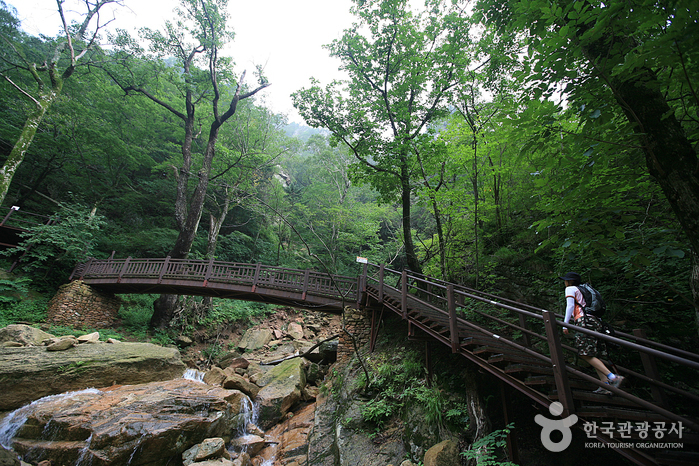 Seoraksan Heullimgol Valley (설악산 흘림골)
6.8 km from the summit
Times and difficulty are estimates from GPS tracks. Before you go, check the weather, sunset time and any trail closures. Course tracks recorded: 2022-01-06
Text on this page was translated automatically from Korean public data. Place names follow the Revised Romanization; signs on the trail are in Korean.
Data: Korea Forest Service and Korea Hiking & Trekking Support Center (Public Data Portal). Course times and difficulty are estimates from GPS tracks (2022).