
Gwanaksan 632m
A Mountain of Fire Swept by Countless Flames
Easy Moderate Hard Valleys Sea views Public transport


- Location
- Gwanak-gu, Seoul; Anyang-si and Gwacheon-si, Gyeonggi-do
- Courses
- 21 · 2 h 45 min – 8 h 5 min
- Distance
- 6.4 km – 22.5 km
- Facilities
- Toilets 86 · Parking 21
- Managed by
- Gwanak-gu Office · 02-879-5000
Trail map
- Directions to trailhead
- Directions to trailhead
- Directions to trailhead
- Directions to trailhead
- Directions to trailhead
- Directions to trailhead
- Directions to trailhead
- Directions to trailhead
- Directions to trailhead
- Directions to trailhead
- Directions to trailhead
- Directions to trailhead
- Directions to trailhead
- Directions to trailhead
- Directions to trailhead
- Directions to trailhead
- Directions to trailhead
- Directions to trailhead
- Directions to trailhead
- Directions to trailhead
- Directions to trailhead
Why it is one of the 100 famous mountains
Selected as one of the Five Representative Peaks of Gyeonggi (Gyeonggi 5-Ak) since ancient times for its outstanding scenery, and designated as an Urban Natural Park in 1968 serving as a popular retreat close to downtown Seoul for metropolitan residents. The main peak is Yeonjudae, which hosts a weather radar facility at the summit. It is also famous for Yeonjuam Hermitage—founded by Monk Uisang during the Silla Dynasty and renovated by King Taejo of Joseon in 1392—and the Standing Bhaisajyaguru Buddha.
About Gwanaksan
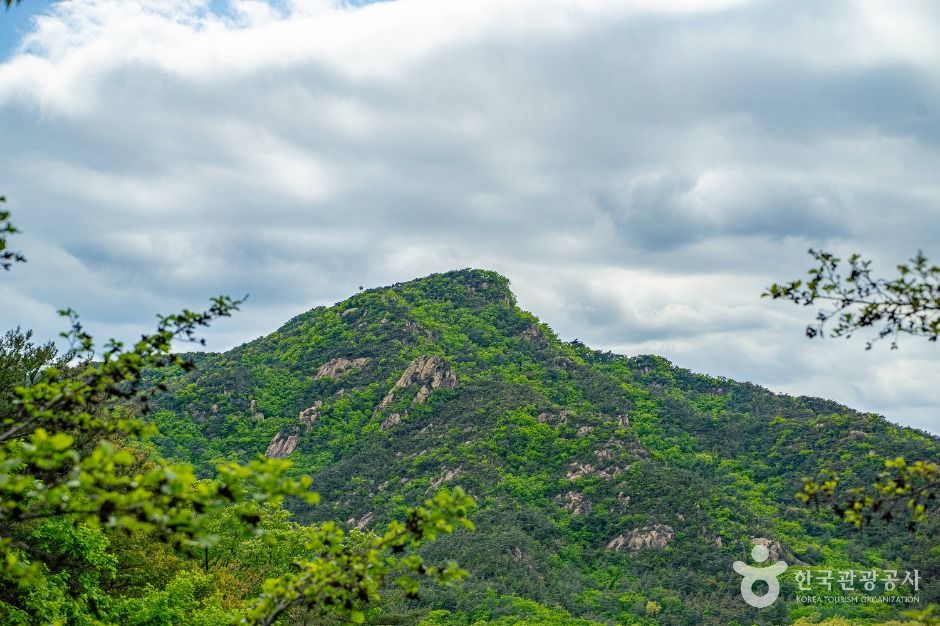
Though historically the guardian mountain of old Gwacheon-hyeon, its front faces toward Seoul. Its fire-element topography reaches a dramatic climax, with flame-like ridges converging toward the summit as if scorching the sky. Viewed from Ttukseom at dusk, it looks truly ablaze, which is why the Haetae statue was placed in front of Gwanghwamun to prevent that fire energy from spreading to Gyeongbokgung Palace.
On the Gwacheon side, however, the branch ridges project an unruly, intensely rugged energy. Looking up steeply, it resembles a shaven head stung by bees. Yet the plain below is so narrow that it cannot be viewed comfortably from afar.
Because its rocky peaks are so striking, its valleys are comparatively unremarkable. Bedrock streams exist to the north and south, but with little water volume, failing to form waterfalls or deep pools. From the northern entrance at Seoul National University to Sillim-ro, bedrock is occasionally exposed along the winding valley, but early cultivation and urbanization have mostly erased its natural traces.
On the other hand, looking across the Hangang River to Namsan, Bohyeonbong Peak, and the distant, scenic three peaks of Samgaksan, it fully deserves its reputation as a celebrated mountain. On clear days, the West Sea is visible, making it truly a "mountain bordered by a great river and the sea."
Spanning Gwanak-gu and Geumcheon-gu in Seoul, as well as Gwacheon-si and Anyang-si in Gyeonggi-do, Gwanaksan is an easily accessible and popular mountain alongside Bukhansan and Dobongsan. Though relatively low in elevation and appearing entirely covered in rock from afar, caution is required due to hazardous rocky ridges along various hiking trails.
Since ancient times, Gwanaksan was regarded as a mountain of fire. When King Taejo of Joseon relocated the palace to the current site of Gyeongbokgung, Monk Muhak opposed it, warning that facing Gwanaksan would bring unending internal strife and foreign invasions due to its fiery energy. However, Jeong Do-jeon argued that the Hangang River cutting across to the south would block the fire energy, leading to the construction of Gyeongbokgung Palace. Some feng shui interpretations attribute the later First and Second Strife of Princes during King Taejong's reign, King Sejo's usurpation of the throne, the Imjin War, the Byeongja Horan, and several fires at Gyeongbokgung to this influence. When Daewongun rebuilt Gyeongbokgung, he erected a stone statue of Haetae, an imaginary sea creature and god of water, in front of Gwanghwamun Gate to suppress Gwanaksan's fiery energy.
Yeonjudae on Gwanaksan is said to have gained its name, meaning "terrace yearning for the sovereign," when ten loyal retainers of the fallen Goryeo Dynasty hid at a temple on Gwanaksan and wept while looking toward the palace. After Yi Seong-gye restored Yeonjuam Hermitage, Grand Prince Yangnyeong and Grand Prince Hyoryeong, the two elder sons of King Taejong, entered Gwanaksan upon learning that their father intended to pass the throne to the third son, Grand Prince Chungnyeong (King Sejong). Gwanaksan was historically also called Samseongsan after three eminent Silla monks—Wonhyo, Uisang, and Yunpil—who built three hermitages (Ilmak, Imak, and Sammak) here to meditate and attain enlightenment. During the Imjin War, Ilmak and Imak were burned down, leaving only Sammaksa Temple.
Courses recommended by the Korea Forest Service
- Sadang-dong Daehakchon → 333 Peak → 414 Peak → 559 Peak → Yeonjuam Hermitage → Summit → Janggunbawi Rock → Janggunbawigol Valley → Gwacheon Industrial Promotion Administration 3 h 40 min
- Anyang Resort → Small Park → Bulseongsa Temple → Summit → Yeonjuam Hermitage → Campground 4 → Square 1 → Seoul National University Entrance 4 h 10 min
- Hoamsa Temple → Janggunbong Peak → Samseongsan → Sammaksa Temple → Mangworam Hermitage → Small Park → Bulseongsa Temple → Gwacheon Industrial Promotion Administration 4 h 30 min
Public transport
The subway is the most convenient. For the Seoul National University side, use Sillim Station or Bongcheon Station on Line 2; for Gwacheon, use Government Complex Gwacheon Station on Line 4; for Anyang, use Gwanak Station or Siheung Station on Line 1.
> Line 2 Sillim Station → Bus 5613, 6514
> Seoul National University Station → Bus 750
Food, lodging & more (Korea Forest Service data, may change)
● Lodging and Other Information
There are no notable accommodations such as campgrounds or recreational forests. A good option, though slightly farther away, is Seoul Youth Hostel located alongside the Hanok Village in Yejang-dong, Jung-gu, Seoul (former site of the Agency for National Security Planning), which offers convenient subway access. A 6-person room is 17,000 KRW for members and 19,000 KRW for non-members. ☎02-319-1318
● Inquiries
Gwanak-gu Office Gwanaksan Management Office ☎02-886-4701, Anyang City Hall Parks and Greenery Division Forestry Team ☎031-389-2416
Nearby attractions
-
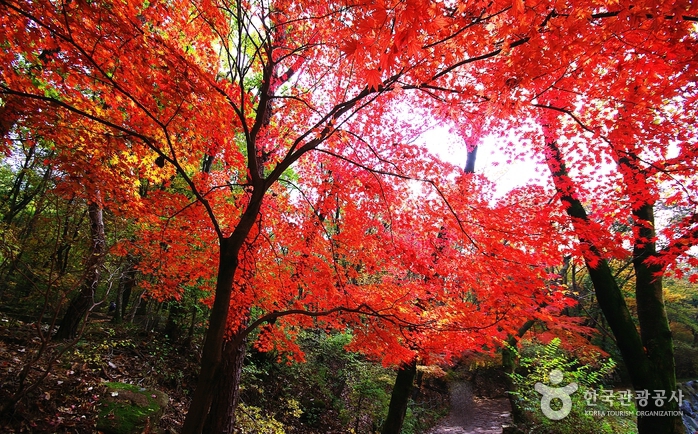 Gwanaksan Mountain (관악산)
1 km from the summit
- Seoul National University (서울대학교) 2.4 km from the summit
-
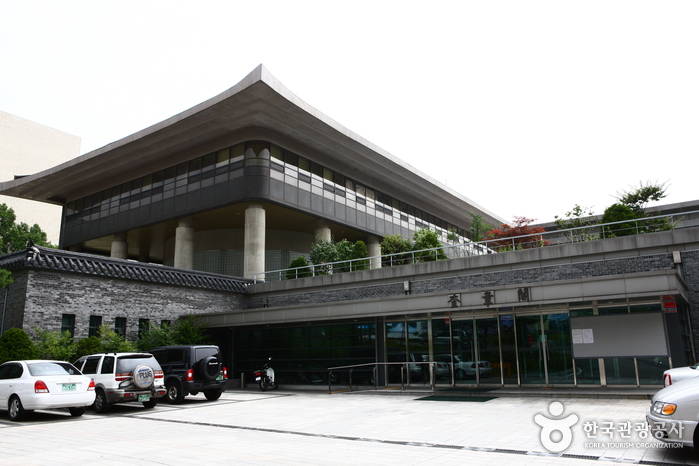 Gyujanggak Library of Seoul National University (서울대학교 규장각)
2.4 km from the summit
- Gwacheon Wildflower Nature Learning Center (과천야생화자연학습장) 2.6 km from the summit
-
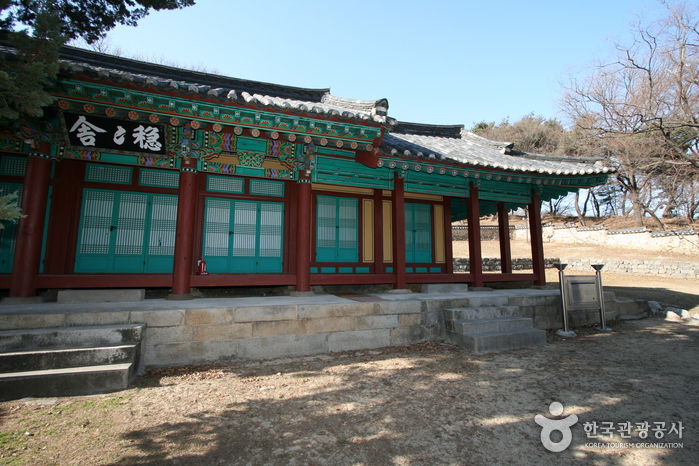 Ononsa Guesthouse (온온사)
2.7 km from the summit
-
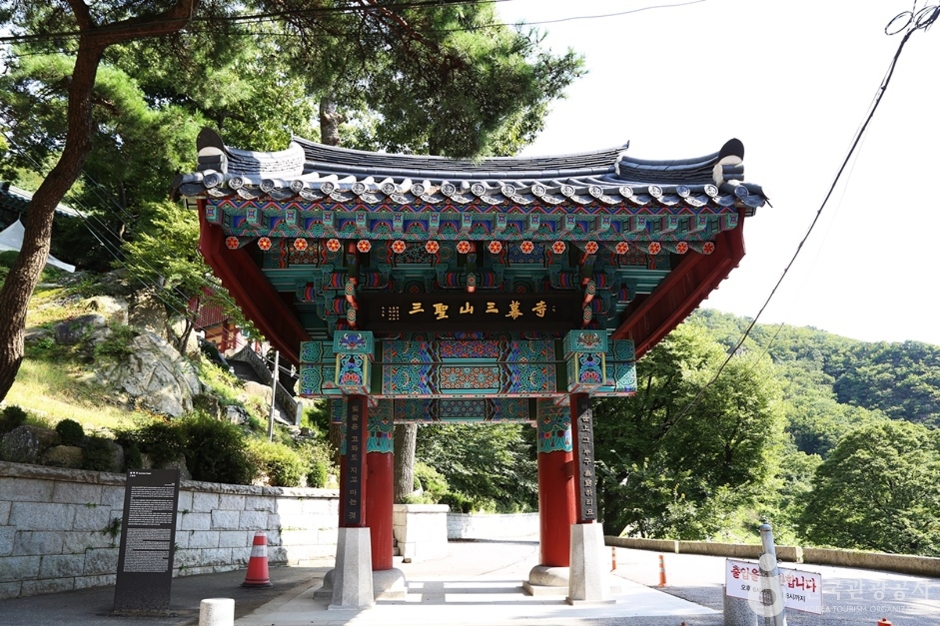 Sammaksa Temple (삼막사)
2.7 km from the summit
Times and difficulty are estimates from GPS tracks. Before you go, check the weather, sunset time and any trail closures. Course tracks recorded: 2022-01-06
Text on this page was translated automatically from Korean public data. Place names follow the Revised Romanization; signs on the trail are in Korean.
Data: Korea Forest Service and Korea Hiking & Trekking Support Center (Public Data Portal). Course times and difficulty are estimates from GPS tracks (2022).