
Dutasan 1,357m
A Peach Blossom Spring that quiets worldly anguish
Moderate Hard Valleys Public transport


- Location
- Samhwa-dong, Donghae-si and Miro-myeon / Hajang-myeon, Samcheok-si, Gangwon-do
- Courses
- 4 · 2 h 55 min – 7 h 25 min
- Distance
- 6.2 km – 13.7 km
- Facilities
- Toilets 7 · Parking 6
- Managed by
- Samcheok City Hall · 033-572-2011
Trail map
Why it is one of the 100 famous mountains
Selected for its scenic landscapes including Mureung Valley, and home to Samhwasa Temple, Gwaneumam Hermitage, and Dutasanseong Fortress. It is also famous for Swinumsan (Osi-jeongsan), a peak named after roughly 50 large and small depressions carved into the bedrock, which has long served as an indigenous prayer site where rain-calling rituals were held.
About Dutasan
The valley was named Mureunggye. Its scenery was so stunning that people boldly proclaimed, "The Peach Blossom Spring is right here." It is a bedrock valley enclosed by Dutasan, Cheongoksan, Gojeokdae, Galmibong Peak, and Peak 1243.
A visit will immediately convince you. Innumerable inscriptions are carved into the inkstone-smooth rock expanses, while crystal-clear water glides thinly over them like glass. Venture deeper into the gorge, and waterfalls cascade on all sides beneath tiers of pine trees clinging to sheer precipices—leaving you feeling as though you have genuinely entered a mythical earthly paradise.
Dutasan resembles the shape of a reclining Buddha and faces Cheongoksan across Bakdalnyeong Pass. Blessed with dense forests and aged pines rooted in craggy cliffs, Dutasan boasts splendid landscapes and is designated Gangwon-do's National Tourist Site No. 1.
The name 'Duta' refers to the ascetic Buddhist practice of abandoning worldly troubles to cultivate the Buddhist path. This indicates that Dutasan has long been a sacred site deeply linked with Buddhism. Although only Samhwasa Temple, Gwaneumam Hermitage, and Cheoneunsa Temple remain today, historical records noting the presence of about ten temples suggest that Mureunggye was once a thriving center of Buddhist ascetics.
Courses recommended by the Korea Forest Service
- Jungbong Branch School → Huinjeokgol → Jeolgol → Mangundae → Cheongoksan → Jikgwanam Site → Heogongdari → Samhwasa Temple 8 h 10 min
- Naemiro-ri → Cheoneunsa Temple → Swinumsan → Dutasan → Baekdudaegan → Tonggolmogi → Myeongjumogi → Daetjae Pass 6 h 40 min
- Samhwasa Temple → Heogongdari → Jikgwanam Site → Cheongoksan → Munbawi → Munbawigol → Gonae → Beoncheon-ri 8 h 15 min
Public transport
The starting base is Donghae.
Express buses run from Seoul Express Bus Terminal (Gangnam) to Donghae every 40-50 minutes. Direct intercity buses also operate from Busan, Daegu, Ulsan, Pohang, Gyeongju, Chuncheon, Taebaek, and other cities across the Gwandong region.
- Donghae → Mureung Valley: Local buses run every 20 minutes
Food, lodging & more (Korea Forest Service data, may change)
● Accommodations and Other Information
Restaurants and guesthouses line the entrance to Samhwasa Temple in Mureung Valley.
Cheongok Motel ☎033-534-8866
Mureung Plaza Hotel ☎033-534-8855
Banseok Sanghoe ☎033-534-8082
Yeongjin Hoegwan ☎033-534-9116, etc.
Minbak (guesthouse) inquiries: Donghae Nonghyup Guidance Division ☎033-521-5547
● Inquiries
Mureung Valley Management Office ☎033-530-2457
Nearby attractions
-
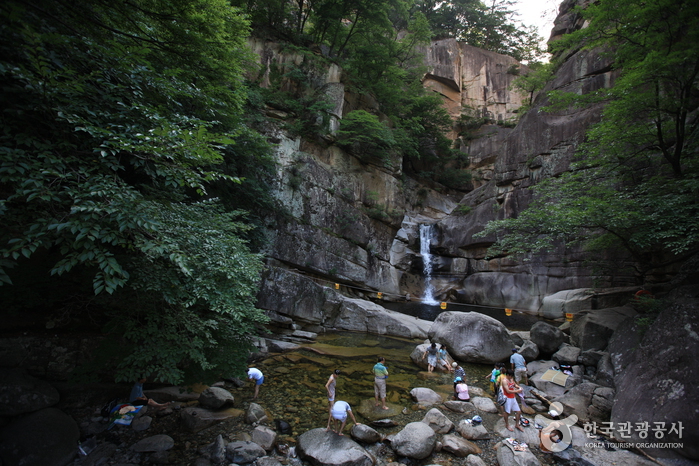 Gangwon Yongchupokpo Falls (무릉계곡 용추폭포(강원))
5.2 km from the summit
-
 Donghae Mureung Health Forest (동해무릉건강숲)
6.2 km from the summit
-
 Samcheok Cheoneunsa Temple (천은사(삼척))
6.2 km from the summit
-
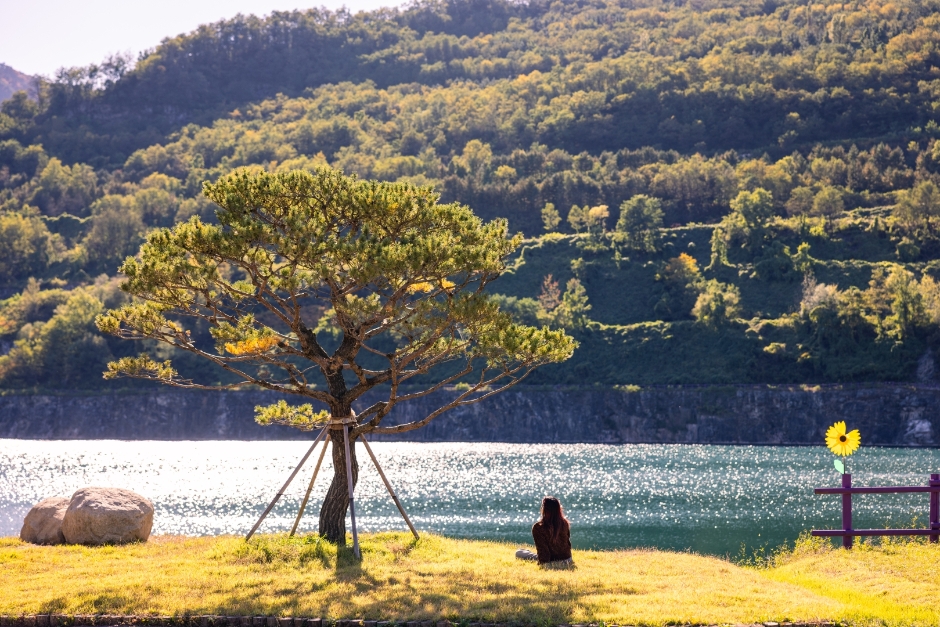 Murung Byeolyucheonji (무릉별유천지)
7.1 km from the summit
- Samcheok Hwalgi Healing Forest (삼척 활기 치유의 숲) 9 km from the summit
Times and difficulty are estimates from GPS tracks. Before you go, check the weather, sunset time and any trail closures. Course tracks recorded: 2022-01-06
Text on this page was translated automatically from Korean public data. Place names follow the Revised Romanization; signs on the trail are in Korean.
Data: Korea Forest Service and Korea Hiking & Trekking Support Center (Public Data Portal). Course times and difficulty are estimates from GPS tracks (2022).