
Chilgapsan 560m
An Untouched Mountain of Natural Wilderness
Easy Moderate Valleys Public transport
- Location
- Daechi-myeon, Jeongsan-myeon, and Jangpyeong-myeon, Cheongyang-gun, Chungcheongnam-do
- Courses
- 4 · 1 h 25 min – 4 h 10 min
- Distance
- 2.6 km – 9 km
- Facilities
- Toilets 9 · Parking 9
- Managed by
- Cheongyang-gun County Office · 041-940-2114
Trail map
Why it is one of the 100 famous mountains
Selected for its scenic beauty, including Baegundong Valley, and its designation as a provincial park in 1973. The valleys are deep and steep, wrapping around the Jicheon Stream, and the name originates from the belief that seven auspicious sites were formed here. It is also famous for Janggoksa Temple, founded by the Buddhist monk Bojo during the reign of King Munseong of Silla, which houses the Seated Iron Bhaisajyaguru Buddha (Treasure No. 174) and other cultural heritage.
About Chilgapsan
Chilgapsan is said to harbor seven auspicious sites along its expansive ridges and deep valleys. Despite being an unassuming, soil-covered mountain under 600 meters in height, it possesses remarkable character. The mountain ridges branching out in five directions and the Ninety-Nine Valleys of Jicheon Stream flowing from the Cheongyang Basin create an extraordinary presence. Cheongyang never heard a single gunshot during the Imjin War or the Korean War, and bordering the renowned scenic retreat of Yugucheon Stream near Magoksa Temple lends credence to its auspicious reputation.
Arriving at Janggoksa Temple, which houses two national treasures and three treasures, deepens this impression. Even if the other six auspicious sites are questionable, at least one holds true. Despite being a small branch temple, it preserves the Seated Iron Bhaisajyaguru Buddha with Stone Pedestal (National Treasure No. 58), the Seated Iron Vairocana Buddha (Treasure No. 174), the Upper Main Hall (Sangdaeungjeon, Treasure No. 162), the Gilt-bronze Seated Bhaisajyaguru Buddha (Treasure No. 337), the Lower Main Hall (Hadaeungjeon, Treasure No. 181), and the Hanging Scroll Painting of Maitreya Buddha on Hemp Cloth (National Treasure No. 300).
While the mountain lacks dramatic rocky peaks or ravines, its panoramic vistas are exceptional. It rivals celebrated peaks of the region, from Oseosan (789.9m), the highest peak in Chungnam north of the Geumgang River, to Seongjusan (677m) to the southwest and Gwangdeoksan (699.3m) to the northeast. To the south, the meandering Geumgang River and Buyeo appear close enough to touch.
Although Chilgapsan is modest in height at 561m above sea level, its terrain is rugged and steep. Because it has remained relatively secluded, it preserves a dense, untouched natural forest. From the summit, the West Sea comes into view, and streams gathering from each valley flow together into the Jicheon and Sacheon streams.
Courses recommended by the Korea Forest Service
- Garijeom → Majaegogae Pass → Samhyeongjebong Peak → Summit → Naengcheon Valley → Chilgapsan Natural Recreation Forest 3 h
- Chilgapsan Natural Recreation Forest → Peak 395 → West Ridge Junction → Summit → Jeomsimgyo Bridge 3 h
- Hanchigogae Pass → Summit → Peak 465 → Janggoksa Temple → Janggok-ri Parking Lot 2 h 10 min
Public transport
The transit base is Cheongyang. Buses bound for Janggoksa Temple operate 8 times daily. Buses to Cheongyang run 7 times daily from Dong Seoul Bus Terminal and 8 times daily from Seoul Nambu Terminal. From outside Chungcheongnam-do, buses are available from Incheon, Anyang, and Gunsan. When using Hanchigogae Pass as the trailhead, take one of the 40 daily buses departing Daejeon toward Cheongyang and disembark at the pass.
Food, lodging & more (Korea Forest Service data, may change)
● Lodging and Other Information
Accommodations are widely available in downtown Cheongyang and near Janggoksa Temple. Chilgapsan Chalet Hotel: 041-942-2000, Hanmaeum Motel: 041-942-1655, Daechi-ri Minbak (guesthouses): 041-942-6772, Chilgapsan Natural Recreation Forest: 041-943-4510
● Inquiries
Cheongyang County Office Tourism Planning Division: 041-940-2446
Nearby attractions
-
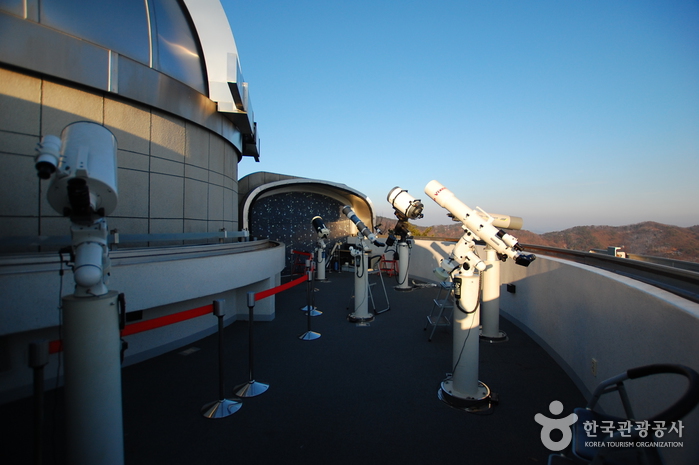 Starpark (Chilgapsan Astrnomical Observatory) (칠갑산천문대 스타파크)
2.4 km from the summit
-
 Alps Village (알프스마을)
2.6 km from the summit
-
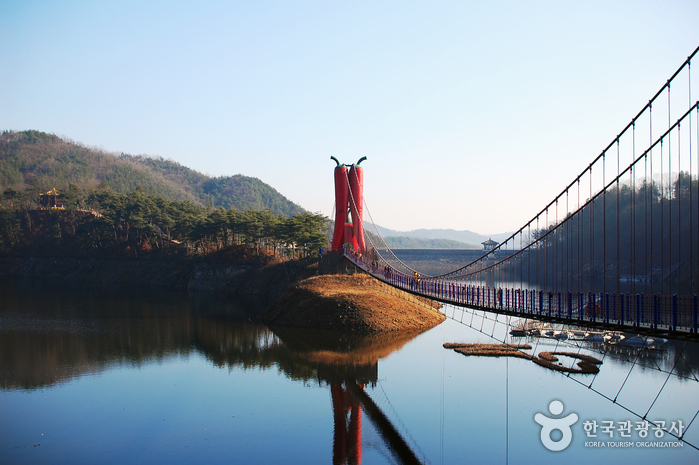 Cheonjangho Lake (천장호)
2.8 km from the summit
- Cheonjangho Suspension Bridge (천장호 출렁다리) 3.3 km from the summit
-
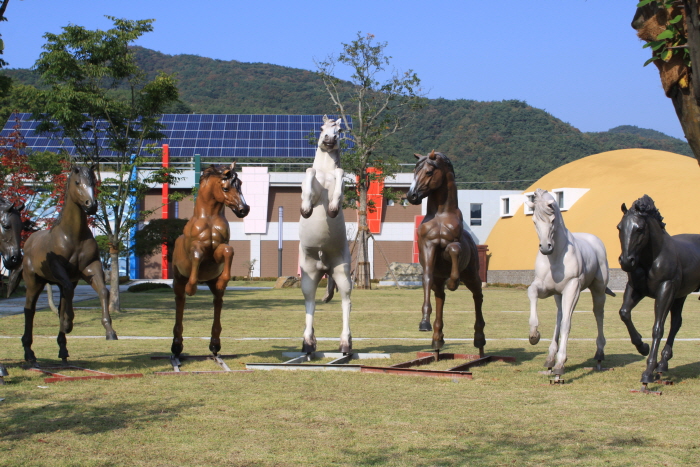 Baekje Cultural Museum (백제문화체험박물관)
3.6 km from the summit
-
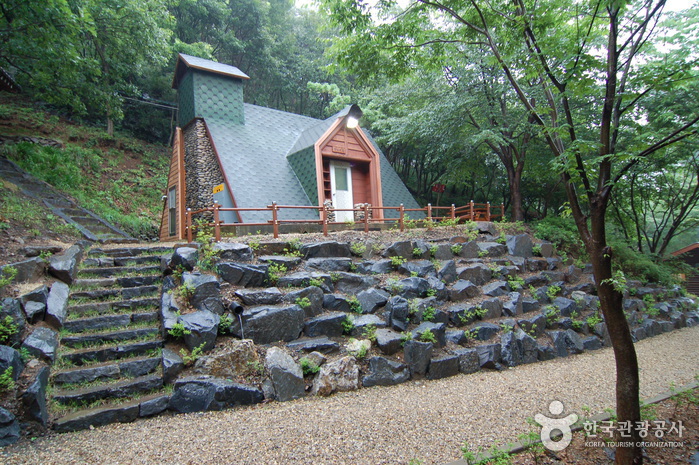 Chilgapsan Recreational Forest (칠갑산자연휴양림)
4.2 km from the summit
Times and difficulty are estimates from GPS tracks. Before you go, check the weather, sunset time and any trail closures. Course tracks recorded: 2022-01-06
Text on this page was translated automatically from Korean public data. Place names follow the Revised Romanization; signs on the trail are in Korean.
Data: Korea Forest Service and Korea Hiking & Trekking Support Center (Public Data Portal). Course times and difficulty are estimates from GPS tracks (2022).