
Biseulsan 1,083m
A grand, towering mountain rising broad to the south of Daegu
Moderate Hard Spring flowers Autumn foliage Silver grass Sea views Public transport
- Location
- Okpo-myeon, Yuga-myeon, and Gachang-myeon, Dalseong-gun, Daegu Metropolitan City; Gakbuk-myeon, Cheongdo-gun, Gyeongsangbuk-do
- Courses
- 5 · 2 h 55 min – 5 h 15 min
- Distance
- 5.8 km – 11.6 km
- Facilities
- Toilets 15 · Parking 16
- Managed by
- Dalseong-gun Office · 053-668-2000
Trail map
Why it is one of the 100 famous mountains
Selected for its beautiful scenery including spring azaleas and autumn silver grass, its superb views, and its designation as a county park. Together with Palgongsan to the north, it forms the Daegu basin and embraces the Nakdonggang River. It is famous for temples such as Sojaesa Temple, founded in 1358 (the 7th year of King Gongmin of Goryeo) by Buddhist monk Jinbo.
About Biseulsan
The two mountains that frame the Daegu basin are Palgongsan and Biseulsan. If granitic Palgongsan is the majestic father mountain, andesitic Biseulsan is gentle and tender enough to be called the mother mountain.
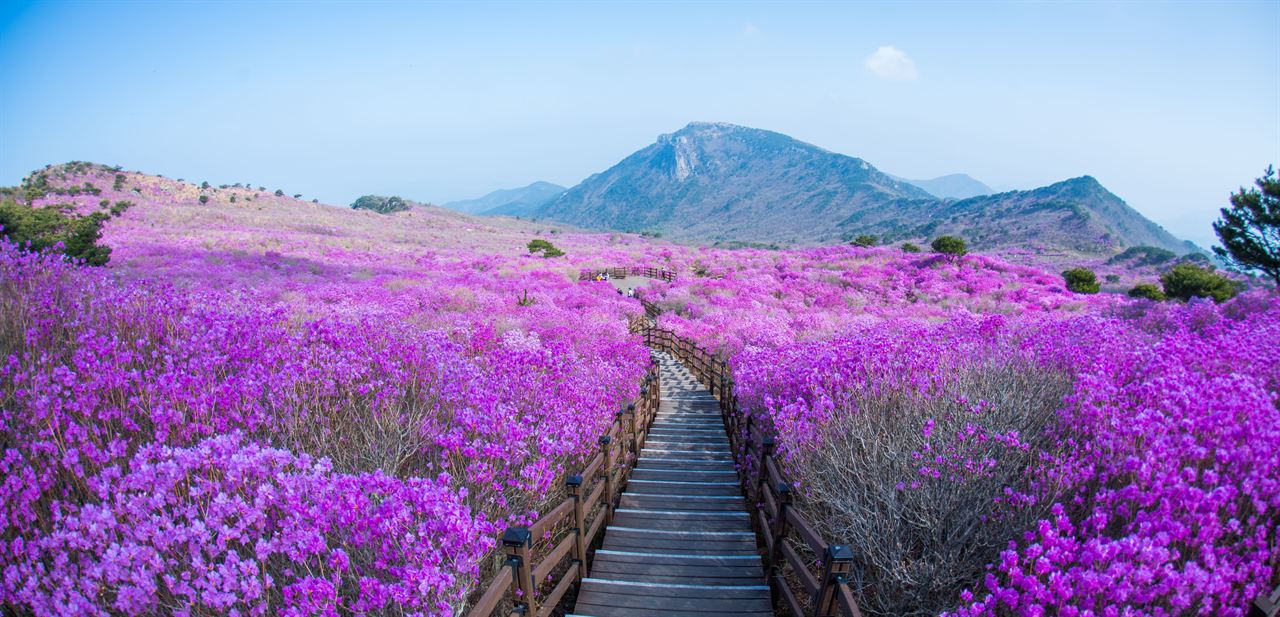
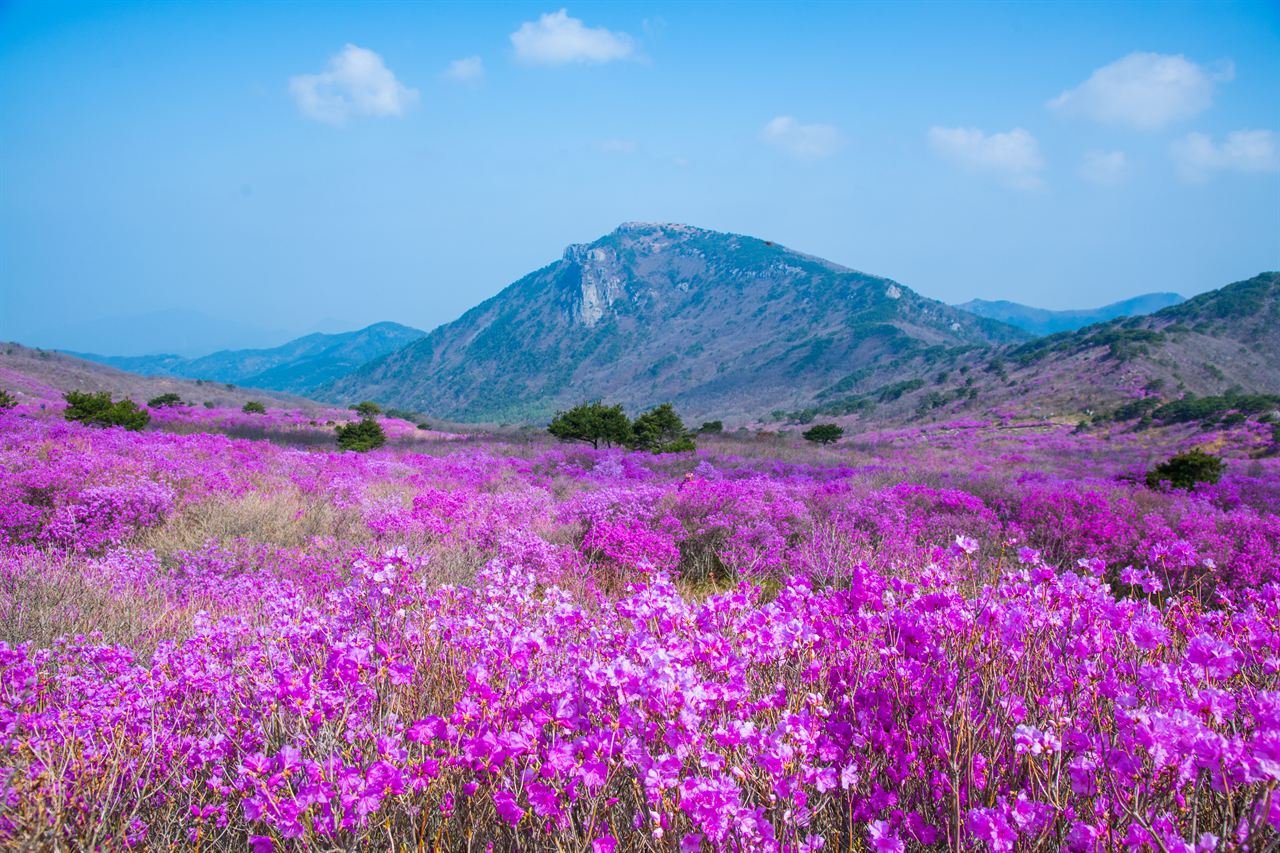
Biseulsan is considered one of Korea's top five mountains for azaleas. The azalea colonies on the flat summit area turn into a sea of flowers in spring. Along with azaleas, another hallmark of Biseulsan is its rock formations.
The rocks of Biseulsan are not only beautiful but also fascinating. The fan-shaped block deposits and block streams at the base of the cliffs create a scenery truly worthy of being called a sea of stone.
Located on the border between Cheongdo-gun, Gyeongsangbuk-do, and Dalseong-gun, Daegu Metropolitan City, its highest peak is Daegyeonbong Peak, which connects south to Johwabong Peak and Gwangibong Peak. Seen from Yugasa Temple, an imposing rocky ridge towers to support the summit.
The view of the Nakdonggang River from the peak is beautiful, and royal azaleas and Jindallae (Korean rosebay) in spring and silver grass colonies in autumn are well worth seeing. Famous rocks such as Monk Rock, Elephant Rock, and Brothers Rock are scattered throughout, as well as temples including Yongyeonsa, Yongmunsa, and Yugasa in Okpo-myeon, Dalseong-gun. From Daegyeonbong Peak, the summit, the trail continues along the southern ridge to 988 Peak - Johwabong Peak.
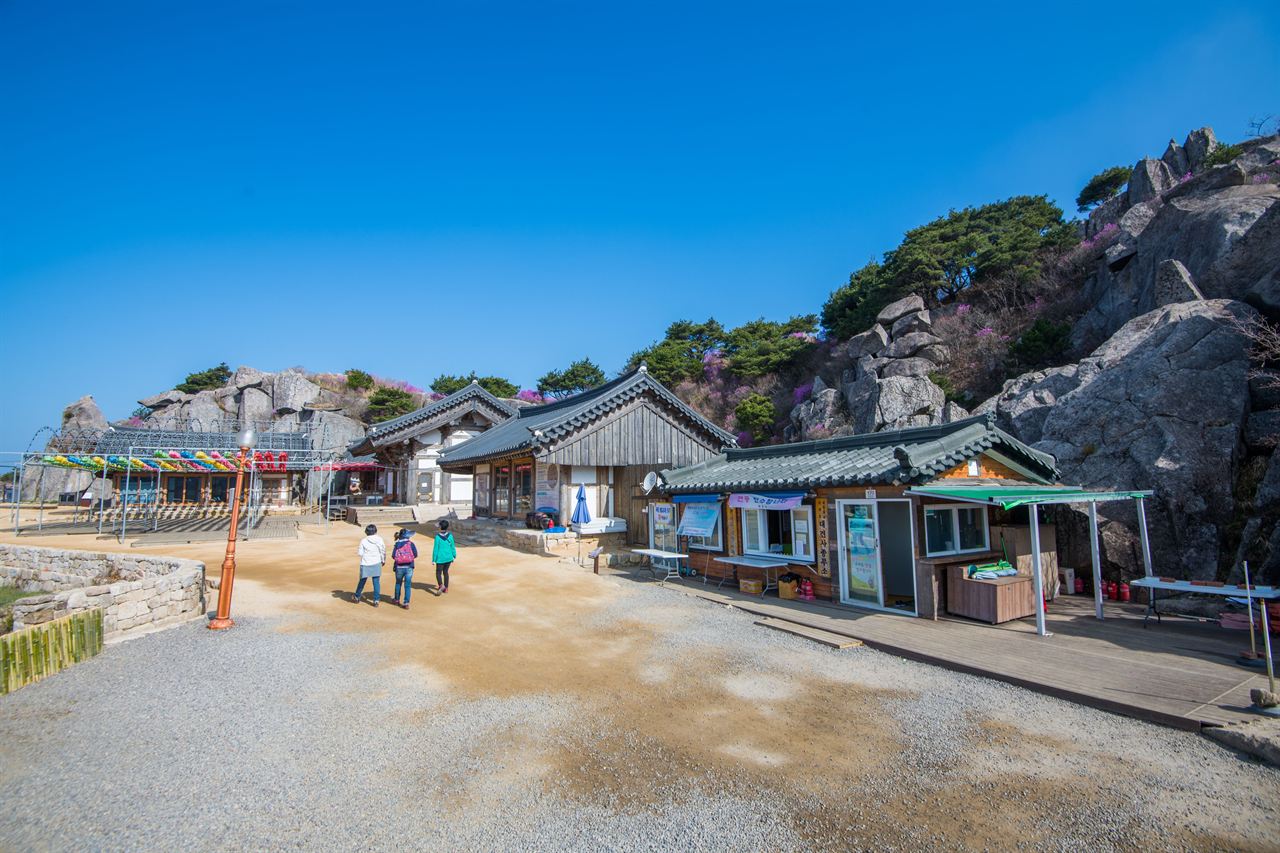
From Johwabong Ridge westward, it leads to Daegyeonsa Temple Site - 1034 Peak, where an octagonal pavilion observatory is installed. The ridge heading north from the summit has trail signs pointing toward Apsan. The roughly 4 km ridge from the summit to Johwabong Peak has rocks only around 988 Peak; otherwise, it is a dirt mountain with no large trees, offering an open grassland-like view that is dyed with silver grass in autumn and red with azalea colonies in spring.
Bush clover and other shrubs are mixed in, but azaleas predominate. Azaleas on Biseulsan grow in three major colonies: near the summit, below 988 Peak, and along the slopes of Daegyeonsa Temple Site. The vast slope of around 300,000 pyeong north of Daegyeonsa Temple Site forms a large-scale azalea colony, and the area below 988 Peak boasts the most vibrant and dense blossoms. Azaleas begin to bloom in mid-April and peak in late April. The Chamkkot (Azalea) Festival is held in late April.
Courses recommended by the Korea Forest Service
- Yongcheonsa Temple → 778 Peak → Daegyeonbong Peak → Doseongam Hermitage → Yugasa Temple → Jungmoe 3 h 30 min
- Biseulsan Natural Recreation Forest → 1005 Peak → Daegyeonbong Peak → North Ridge → Yongyeonsa Temple 5 h 10 min
- Osan-ri → Daedonggol Valley → 4-way Saddle → Daegyeonbong Peak → Byeongpungdeum → Yugasa Temple 3 h 10 min
Public transport
The starting hub is Daegu.
Takes 30–40 minutes from Cheongdo Bus Stop.
Take an intercity bus from Daegu to Hyeonpung, then catch a local bus to Sojaesa Temple or Yugasa Temple (takes about 1 hr). City buses also run between Daegu and Hyeonpung, and extend to the mountain entrance parking lot on Saturdays and Sundays (Bus No. 601).
Buses run between Hyeonpung Intercity Bus Terminal and Yugasa Temple 6 times a day at 2-hour intervals.
Food, lodging & more (Korea Forest Service data, may change)
● Food, Lodging & Other Info
There are three or four restaurant-minbak guesthouses near the Yugasa Temple parking lot.
Manmul Restaurant ☎ 053-614-2456. A must-try local specialty in Hyeonpung is Hyeonpung Halmae Gomtang (beef bone soup).
Park So-seon Halmae Gomtang in downtown Hyeonpung ☎ 053-615-1122
● Inquiries
Biseulsan Natural Park Management Office ☎ 053-614-5481~2
Nearby attractions
- Biseulsan Recreational Forest (비슬산자연휴양림) 2.9 km from the summit
- Yongyeonsa Temple (Daegu) (용연사(대구)) 3.7 km from the summit
- Daegyeonsa Temple (대견사) 3.7 km from the summit
- St. Mary's Pine Forest Village (성모솔숲마을) 4.2 km from the summit
- Daegu National Science Museum (국립대구과학관) 6.1 km from the summit
-
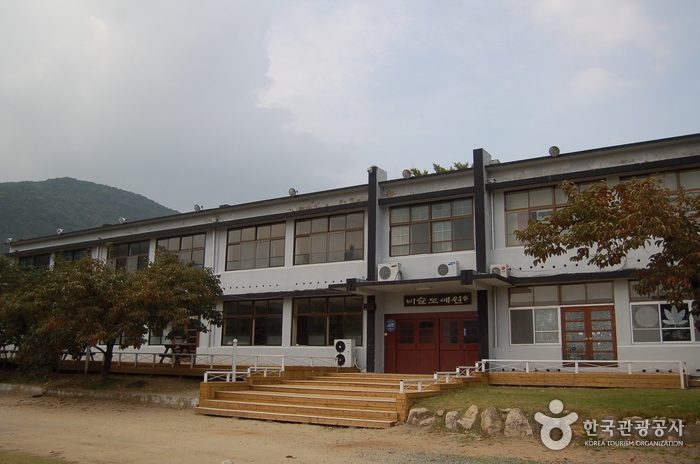 Bisl Pottery Studio (비슬도예원)
6.8 km from the summit
Times and difficulty are estimates from GPS tracks. Before you go, check the weather, sunset time and any trail closures. Course tracks recorded: 2022-01-06
Text on this page was translated automatically from Korean public data. Place names follow the Revised Romanization; signs on the trail are in Korean.
Data: Korea Forest Service and Korea Hiking & Trekking Support Center (Public Data Portal). Course times and difficulty are estimates from GPS tracks (2022).